

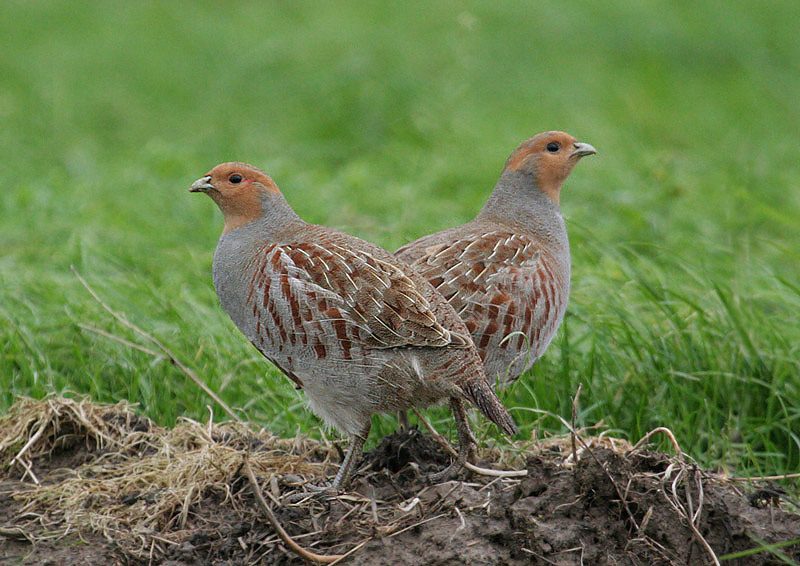
A new study by the INBO confirms that several factors contribute to the decline of the partridge in Flanders. Some factors play a greater role than others.
The study states that management measures should primarily focus on the factors with the greatest impact on population growth: the survival of the hen during the breeding season, the nesting success and the survival of the chicks. For maximum effect, the researchers recommend tackling these three factors simultaneously.
The study also shows that stopping hunting in itself is insufficient to prevent the further decline of the Flemish partridge population.
What was investigated?
The study had two objectives: to identify which factors contribute most to the decline of the partridge in Flanders and to determine which factors management can best focus on for population recovery.
To do this, the researchers used a detailed population model that takes into account all the life stages of the partridge. For the necessary population data, 126 partridges (67 cockerels and 59 hens) were tagged in three study areas: Middelkerke and Roeselare (West Flanders) and Bekkevoort (Flemish Brabant), in collaboration with local WBEs. The tagged animals were followed weekly during 2022–2024.
What was found?
The study found large annual losses in partridges: annual survival was barely 35% for hens and 22% for cocks. Predation was the main cause of death: 71 animals (64%) were preyed.
Predation was the main cause of death. As many as 64% of the partridges were preyed.
For hens, the breeding season is the period with the highest mortality. Predation by birds of prey and mammals was the main cause of death in this phase at 76%. Increasing the survival of the hen during the breeding season is therefore an important pillar for population recovery.
To increase the survival of the hen and her clutches, the researchers recommend measures that reduce the predation pressure. In doing so, they argue for a multispecies strategy, because multiple predators contribute to the predation pressure. Biotope management to improve the nesting habitat is also important in this phase.
Increasing the nesting success of the first clutch is the second important pillar for population recovery. In the study, only 40% of the first clutches were successful and produced chicks.
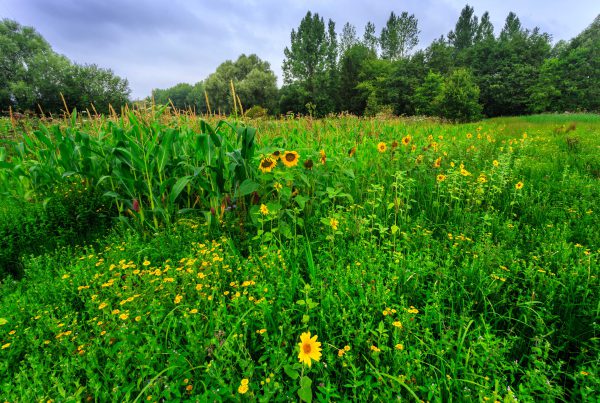
In addition to predation, mowing losses are the main cause of nest failures. In a stripped-down agricultural landscape, partridges often nest in field margins, roadsides and along watercourses. The hatching peak of clutches is between 21 and 28 June. That is why the researchers recommend postponing mowing until at least 15 July, and preferably until 1 August.
The third important pillar is improving chick survival. To achieve this, the researchers recommend measures that focus on creating suitable chick habitat and reducing predation pressure.
For effective population restoration, management measures must initially focus on these three pillars, as they can still improve a lot and therefore have the greatest impact. According to the researchers, an integrated approach, in which the three pillars are tackled simultaneously, will have the most effect.
In addition, the study investigated the impact of hunting. This shows that stopping culling, at the hunting pressure measured in the study, does not prevent the decline of the Flemish partridge population. According to HVV, this is not surprising: the partridge population also continued to decline in the Netherlands, Switzerland and Luxembourg after a hunting ban was introduced.
HVV’s position
The new INBO study supports the theory of the GWCT (Game & Wildlife Conservation Trust). As early as the 1970s, based on decades of field research, he described the three main reasons for the decline of the partridge — sharply reduced hen and chick survival and lower nesting success — as the ‘three-legged chair’. Modern agriculture and predation often affect all three legs of that chair or have such a large effect on one of the legs that the entire chair becomes shaky and unstable.
Studies and practical examples from the United Kingdom show that partridge protection and modern agriculture are compatible when the theory of the ‘three-legged chair’ is applied.
HVV has been endorsing this theory of the GWCT for years. The results of the new INBO study once again make it clear that the partridge in a cultural landscape such as Flanders depends on active management for its survival.
That is why HVV asks
- Increased hunting possibilities for predator control:
- night hunting and construction hunting for the fox outside the cleaning season
- The opening of the hunt for the stone marten
- inclusion of black crow and magpie in Article 3 of the Hunting Decree and a hunting opening time for these species
- Workable scheme for hunting feral cats
- widening the perimeter within which farmers can conclude management agreements with the VLM for the creation of nesting and chick habitat for the partridge;
- Mowing ban in management agreements and on verges along roads and watercourses until 1 August.