


OUDSBERGEN (Neth.) –
In recent months, about 20 deer have been brought into the Nature Aid Centre. The animals are seriously ill: they have diarrhoea and are skin and bones. “We don’t know what’s going on.”
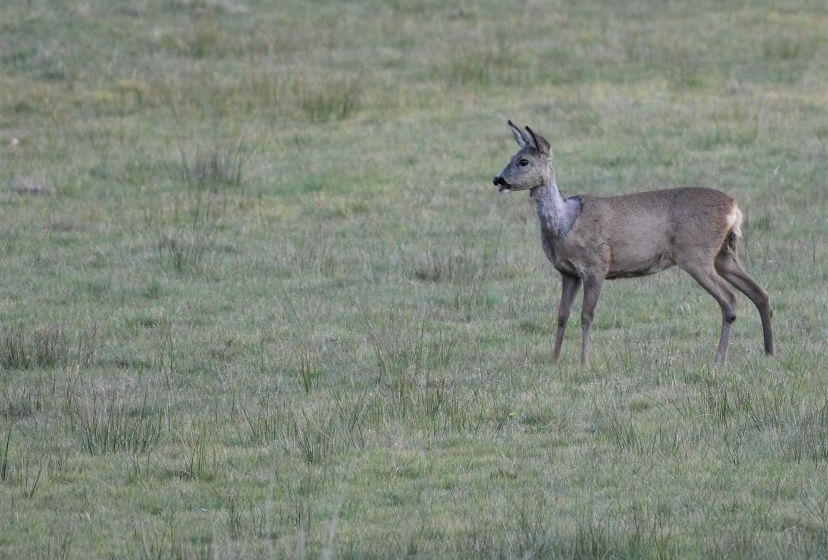
Last weekend, a critically ill roe deer was spotted in Borgloon. And at the end of last week, a dead deer had already been found in the area. “It is a clinical picture that we have regularly received in recent months. They are all roe deer that have severe diarrhea, are totally weakened and eventually die. Of the animals that were brought here alive, we have not yet been able to save a single one. That’s how emaciated they were,” says Sil Janssen of the Nature Aid Center.
Virus or bacteria?
Because there are now about 20 animals, samples were taken and sent to two labs. “At the Research Institute for Nature and Forest (INBO) and in the Netherlands, they are looking at what it could be. But so far without result. The only thing we know for sure is that there is a contagious disease among the roe deer. Whether it is a virus or a bacterium, all that has yet to be determined by the research. By the way, we are not the only ones who have noticed it. The hunting industry has also already let us know that something is going on with the deer.”
According to Janssen, the fact that a disease is dormant within the roe deer population is quite normal. “Because there are a lot of deer. Only it is to be hoped that it is a transient disease. Otherwise, that could have a big impact on the population. The best example is the disease in hedgehogs. The mystery has still not been solved there either.”
As with the hedgehogs, the Nature Aid Center receives sick deer from all corners of Limburg. “So it is certainly not the case that the disease manifests itself in a certain region.”
Anyone who sees a critically ill deer lying in the forest or in the grass can always contact the Nature Aid Centre. “We will then look at what the options are. Deer that stay down are actually gone. The least strength they have left, they would squeeze out to get away from people. The fact that you can get to it is a bad sign. For all the deer that now have the disease, there is little hope as long as we don’t know exactly what is going on and how we can cure it.”