


We already had a separate article on a species we all know, the Woodcock. We then highlighted its migratory behavior in particular.
Today another special one, namely the Cuckoo.
We already had a separate article on a species we all know, the Woodcock. We then highlighted its migratory behavior in particular.
Today another special one, namely the Cuckoo.
What is special is its behavior as a brood parasite. There are also those that lay their eggs in strange nests. Ducklings, swallows, the house sparrow, the starling and the rook, are species where females attempt to lay one or more eggs in a nest of a conspecific or closely related species. However, these females breed themselves, and the species do not depend on this behavior. The Cuckoo is the only breeding parasite in Europe that does not breed itself, and is therefore dependent on it.
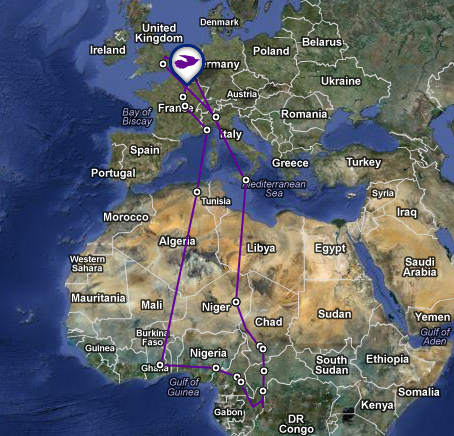
Also distinctive is its migratory behavior. A European project is tracking Cuckoos as they migrate to Africa and back – bto.org.
One particular bird followed the following route in 2012: leaving the Congo, to reach the Ivory Coast via Cameroon, Togo and Ghana. after crossing the Sahara, it ended up in Italy. He then proceeded in one stretch to England, ending up back home in early May.
In early March 2013 the same bird returned from Congo. Cameroon became the first stop. Then Nigeria, Ghana, the Sahara and northern Algeria. His next stop in Italy was a lot further north than the one the year before and he also immediately moved on to central France. Bad weather held him up a bit around Paris, also made him briefly end up in Belgium.
Clearly a different route, then!

Also specific is the breeding behavior of this Cuckoo. Last year it arrived in mid-May and was already back away to its winter range around mid-June. Less than a month, in other words.
Jachtexamen.be is the online learning environment for hunting, providing optimal exam preparation.