


Gun Types
We start with a controversial saying, to explain the history from the Juxtaposé to the Superposé.
We start with a controversial saying, to explain the history from the Juxtaposé to the Superposé.
The first double-barreled rifles were side by side. And this for the simple reason that these rifles had external cocks. So these were on the side of each of the barrels. With the arrival of the Hammerless rifles, the side by side was no longer really necessary and alternatives were possible.
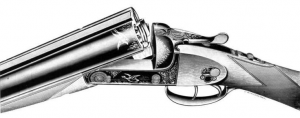
Special cases have been designed there such as the Side Motion in the accompanying photo.
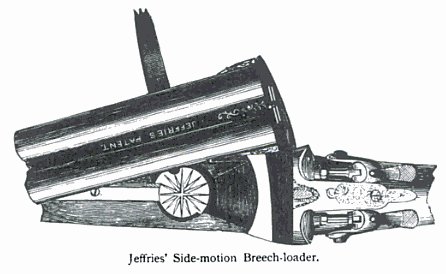
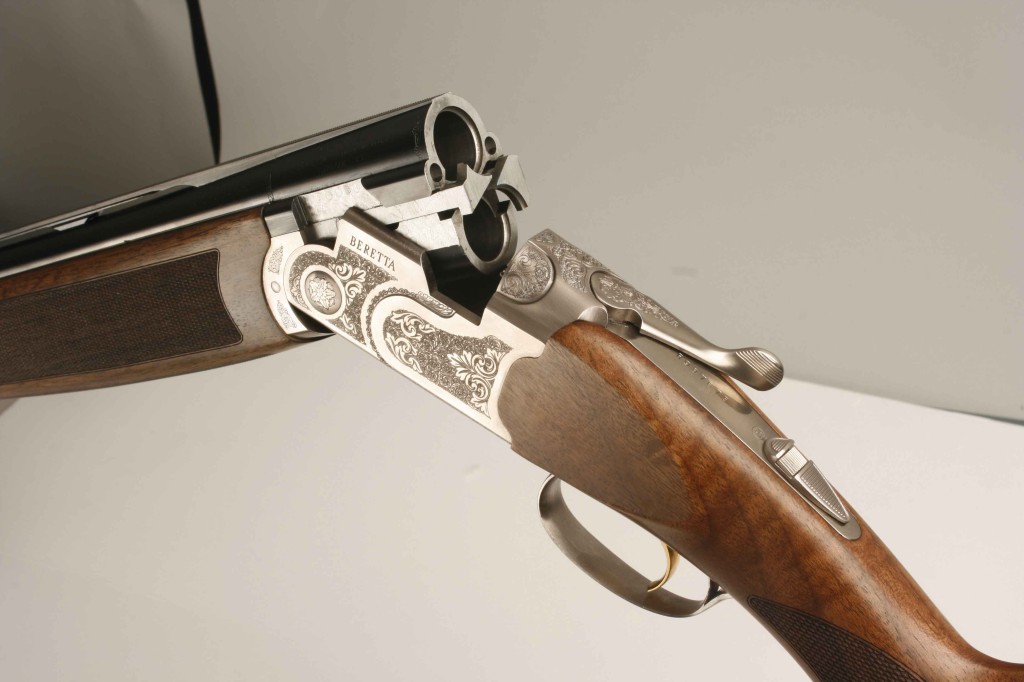
There were also some special designs at the Superposé. Like this one, where the construction consisted of turning the juxtaposé a quarter, with the hinge then on the side and thus also closing sideways.
Because the big problem with the first superposés was the hinge. If this was placed under the two barrels, a very high construction was obtained (2 barrels and hinge underneath).

Only later, with the use of the tap hinge (middle of the lower barrel) this problem was solved. As a result, the rifle does not tilt at the bottom but rather pivots in the middle.
The first superposé was only created in the early 1900s (Boss & Co and Woodward), but has since surpassed the juxtaposé in terms of sales. The cheaper manufacture, but also the better weight distribution and better visibility (left and right) are probably the deciding factors here.
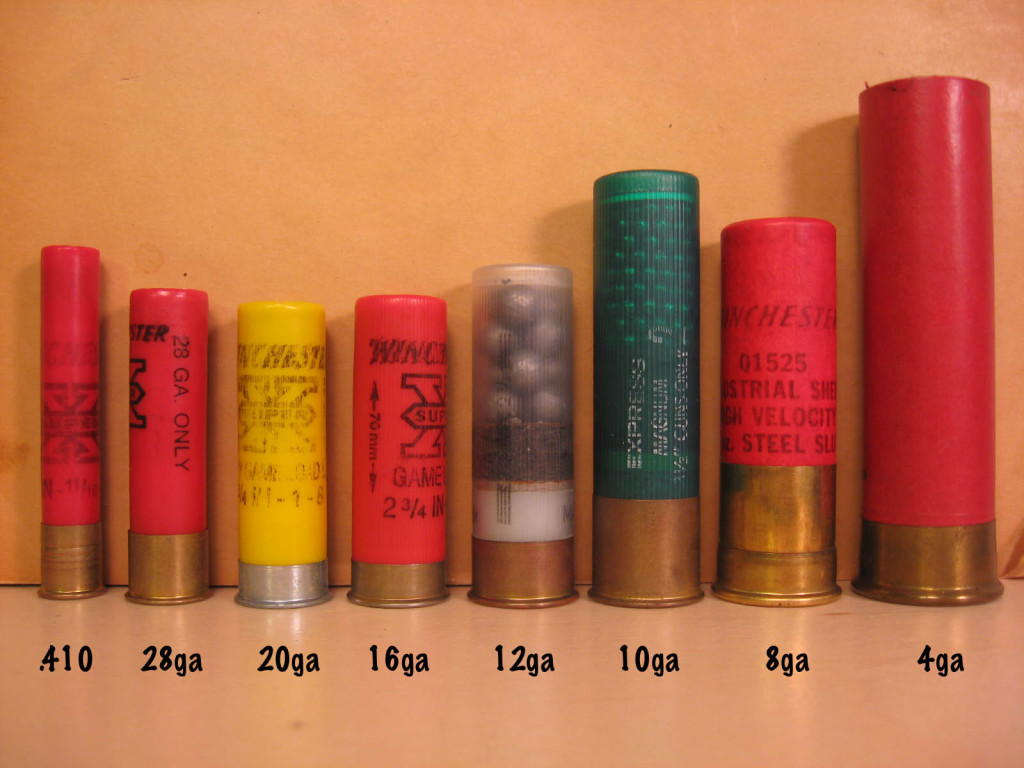
Everyone knows the basics of the calibers (indication of the inner diameter of barrel) in hail weapons: from the Latin “qua libra” or per pound; At calibre 12, 12 identical bullets were made from one pound of lead.
For the sake of completeness, here is the formula for converting caliber to mm. Where “d” is the result, the diameter is in mm, and “n” is the caliber.
For the sake of completeness, main elements of the formula

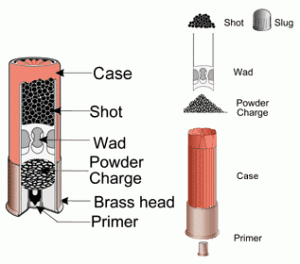
There are the following parts of the hail cartridge:
The following dimensions play a role in the Hail pattern
It would be logical to indicate the hail thickness in mm, but unfortunately this is not the case. The numbering varies from country to country. The FN numbering is often used as a reference. Table below as an overview, where numbers 3 and 1 are not manufactured and where 00 (4 mm) may not be used.

Below are some striking examples of remarkable calibers. Certain calibers are included here either because they are frequently used or because the history is very intriguing within Hunting.
The Canardouze (or also Canardière), as indicated in the name (Canard & Douze) was specifically used for hunting ducks (French: Canard) and by extension waterfowl. It is a caliber 12 (French: Douze).
But not an ordinary caliber 12. A juxtaposé with a chamber length of up to 89 mm (compared to normal 76 mm), with long barrels of 80 to 90 cm (normally about 70 cm) and a weight of 4 to 6 kg. The aiming distance goes up to 80 meters. Another specific feature is that two cartridges can be fired at the same time by means of a 2nd trigger. Up to 114 grams of hail is fired with a small disadvantage, a great recoil. This means that this rifle is only used lying down.
The long distance (up to 80 meters) made the use specific: waterfowl that lie at sea (not flying) shot from land or sometimes the rifle was mounted on a canoe and from the water a group of ducks (up to more than 60 at a time) was shot.
In English, we use the word Kaliber for both Hail and Bullet Weapons. This is different in English. There they talk about “gauge” for Hail and “bore” for Kogel.
And, well, the Hail caliber .410 is actually a Caliber for hail cartridges, but expressed in “bore”, like Bullet cartridges. The size is .410 Inch or converted 10.4 mm. If we wanted to express the .410 in Hail caliber (gauge) this would be about a caliber 36.
The .410 caliber is sometimes chosen for starters or youngsters, given the very low recoil. Its use is usually limited to the clay pigeon discipline “Skeet” and occasionally for “shooting” rabbits or stationary birds.
The accompanying photo shows a very large diversity of hail loads. Where usually only the hail with FN numbering 7 to 9 is used.
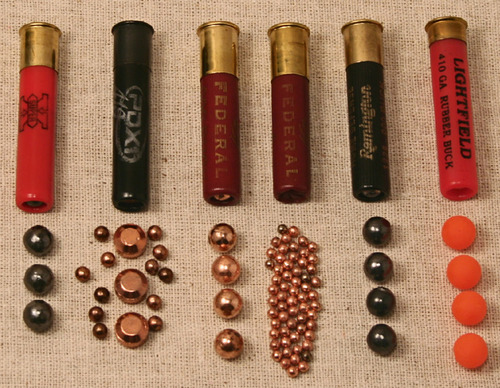
Bullet used in smoothbore rifle (shotgun) specifically for big game hunting at close range.
Some types are available here:
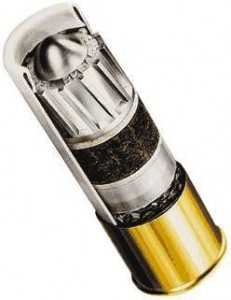
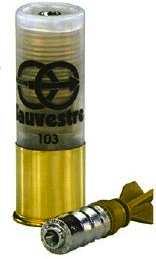
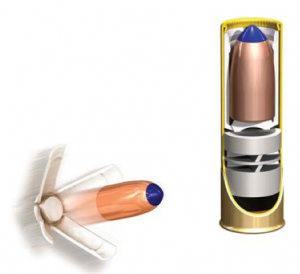
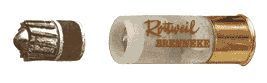
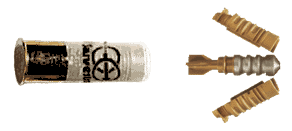
A real special smoothbore ball is the Paradoss. Below is info with a comparative table

At an Italian manufacturer we found a number of special Hail cartridges. Unfortunately almost all of them are only in Lead version, and therefore not usable in Flanders.
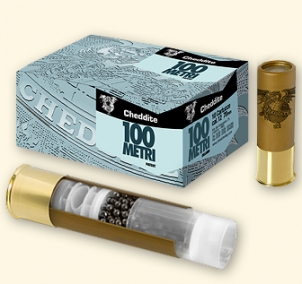
By using a special prop, a kind of inverted Cup, this pattern only gives a reasonable spread from 100 meters. Ideal for talking to game at long distances.

A pattern with a very authentic look & feel. A cardboard sleeve and a felt wad. Ideal for finer work, both rifle and game.
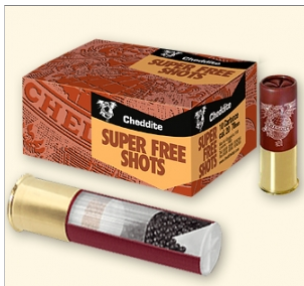
Here too a special plug that sits on top of the hail and by means of a cross division immediately gives the load a large spread. A kind of Skeet effect, for Rabbits in the forest or when ferretting.

The strangest hail load in our opinion: only 2 “Ballets” – Doppia Palla. Ballistic not exactly the most efficient operation. Since the flight will probably be quite irregular. This is in contrast to the Brenneke or Fleche who keep their course better due to the rotating movement.
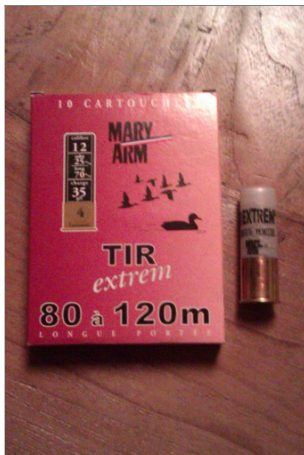
Just like the 100-Metri, a pattern that only gives a reasonable spread from 80 to 120 meters.
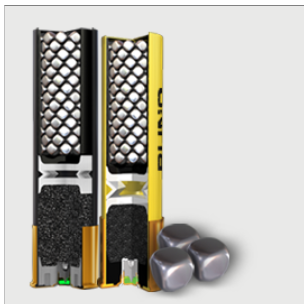
Winchester, best known for its (western) pellet guns, has recently launched an innovative shotgun cartridge on the market. By means of an octagonal design, about 15% more hail fits in a standard cartridge. However, the cartridges are only available in the forbidden by us, no. 2.
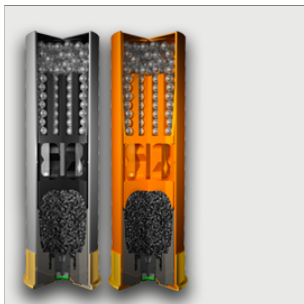
Finally, a practice pattern for the Kleischieten.De Winchester AA Tracker clearly shows where the hail ends up. The prop is weighted and flies, with the hail, in the same trajectory, and therefore clearly shows if you miss and why. The pattern comes in 2 colors, black and orange, to be used depending on the background.

The missing pattern. The legislator allows cartridges for steel hail up to calibre 24. However, these do not “exist”. After a long search we found one in an American Webshop. Only lead shot, no Steel.We have heard even less of rifles Calibre 24.
Jachtexamen.be is the online learning environment for hunting, providing optimal exam preparation.