


Quite a few game species have no color vision – especially Big Game.
Wild Specials – Sight Birds
All about bird vision.
Vision Birds
Birds, on the other hand, can perceive colors better than humans. Like us, they recognize the three main colors
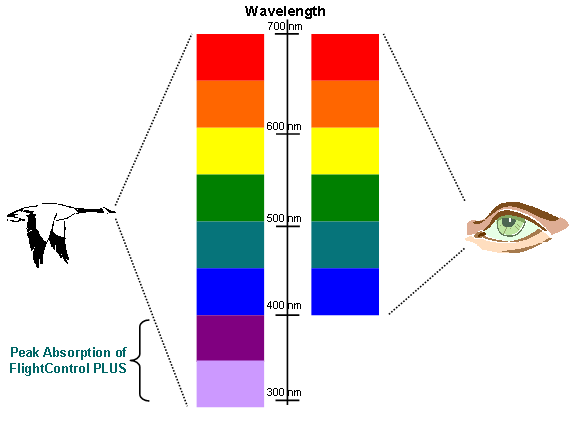
Color also plays a big role in the seduction game of birds. To us, a male and female can look exactly the same. The color differences between the two sexes elude us, but the birds definitely see them. The same goes for the robin and blue tit in your garden. A male magpie really does look very different in magpie eyes than a female magpie. The birds especially see many differences in the (to us) black parts of the plumage.
Birds can also process many more images per second than humans. What we see as a smooth film, they experience as individual images. This is why chickens see the fluorescent lights in a chicken barn as a flickering light. LED lights are therefore better. Nocturnally active birds have mostly rods and compensate for the lack of acuity by having very good hearing. Birds active during the day, on the other hand, have a lot of cones. Kingfishers, for example, have many red cones because red takes away the glare of the water. Conversely, birds that search for fish under water have many blue and green cones.
The urine trails of mice also light up ultraviolet. This is how kestrels detect their prey. And thanks to UV light, birds can still navigate when it is completely cloudy and they cannot orient themselves to the sun.
We can therefore refer to this as an Eagle’s Eye. Predators have large eyes, typically 1.4 times larger than birds of the same size. With owl eyes up to 2.2 times larger. Also, they have about double the number of cones and rods within their eye, versus humans.
Birds of prey have 6 to 8 times better eyesight than humans, enabling them to perceive a 2-mm insect from an 18-meter-high tree.
No permit yet?
Jachtexamen.be is the online learning environment for hunting, providing optimal exam preparation.