


The hunting horn is known in two forms within hunting
Hunting Habitat – Hunting Horn
A traditional tool of the hunter.
Hunting horn
French hunting horn
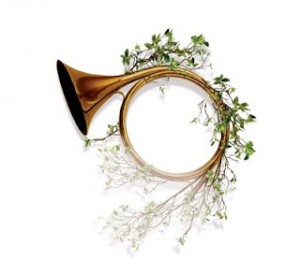
The instrument used by the French Hunting Horn is the “Trompe d’Orléans”. The horn has three and a half turns, has a diameter of 37 cm and weighs only 750 gr. The total length of the pipe is 4.54 m. The instrument is in the key of D major and has a range of 3 octaves.
History
The French hunting horn, which has always had the dual function of a (hunting) signal instrument and a pure musical instrument, occupied an important place at the French court from the 17th century onwards. Especially since Louis XIV chose him as a signal instrument for his yachts. It was Marquis de Dampierre (“Gentilhomme des Menus Plaisirs du Roi”) who, with his brass bands, laid the foundation for the current repertoire and playing technique and who, by determining the length of the tube, also laid down the key. The horn owes its tradition to our time mainly to the long walk hunt with pack dogs (Chasse à Courre or Vénerie) as it developed in France and is still practiced today. This of course explains why this horn has many practitioners, especially there, and the entire terminology is French.
Playing style
The hunting horn has no keys or valves. The different tones and sound effects are produced only with the help of the lips, jaws, tongue and air pressure. All musicians in the group play the same type of instrument, only the mouthpiece may differ. The hunting horn is usually played without the accompaniment of other instruments. The variation in tempi and measure, and the harmony of the different parts should then provide the necessary color and variety. The horn also comes into its own in combination with organ, piano, orchestra and even choir.
The hunting horn is played standing up. For a better overall sound, the players (“sonneurs”) stand in V-formation with the bell, and thus with their backs, to the audience.
Playing style
The hunting horn has no keys or valves. The different tones and sound effects are produced only with the help of the lips, jaws, tongue and air pressure. All musicians in the group play the same type of instrument, only the mouthpiece may differ. The hunting horn is usually played without the accompaniment of other instruments. The variation in tempi and measure, and the harmony of the different parts should then provide the necessary color and variety. The horn also comes into its own in combination with organ, piano, orchestra and even choir.
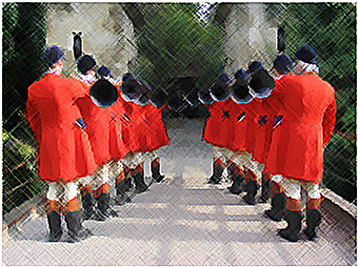
The hunting horn is played standing up. For a better overall sound, the players (“sonneurs”) stand in V-formation with the bell, and thus with their backs, to the audience.
Repertoire
With the French Hunting Horn, given the musical range, real music is played. Here they call this fanfares. The most important were composed by Marquis de Dampierre. In the brass bands two large groups.
- The “Fanfares de Circonstances et d’Animaux”: The actual hunting (signal) fanfares. They provide information about the course of the hunt and about the hunted animal. About 51 of these fanfares form the list of “fanfares obligatoires” and are compulsory material for obtaining the “Brevet du Sonneur Classé (BSC).
- The “Fanfares de Personnes et de Lieux”: Written to honour or commemorate persons, places and events linked to hunting.
A fairly complete overview of repertoire on the site of hoorn.be and on Fanfares Trompe de Chasse or almost all 450 pieces on Ma Chasse.
German Hunting Horn
History
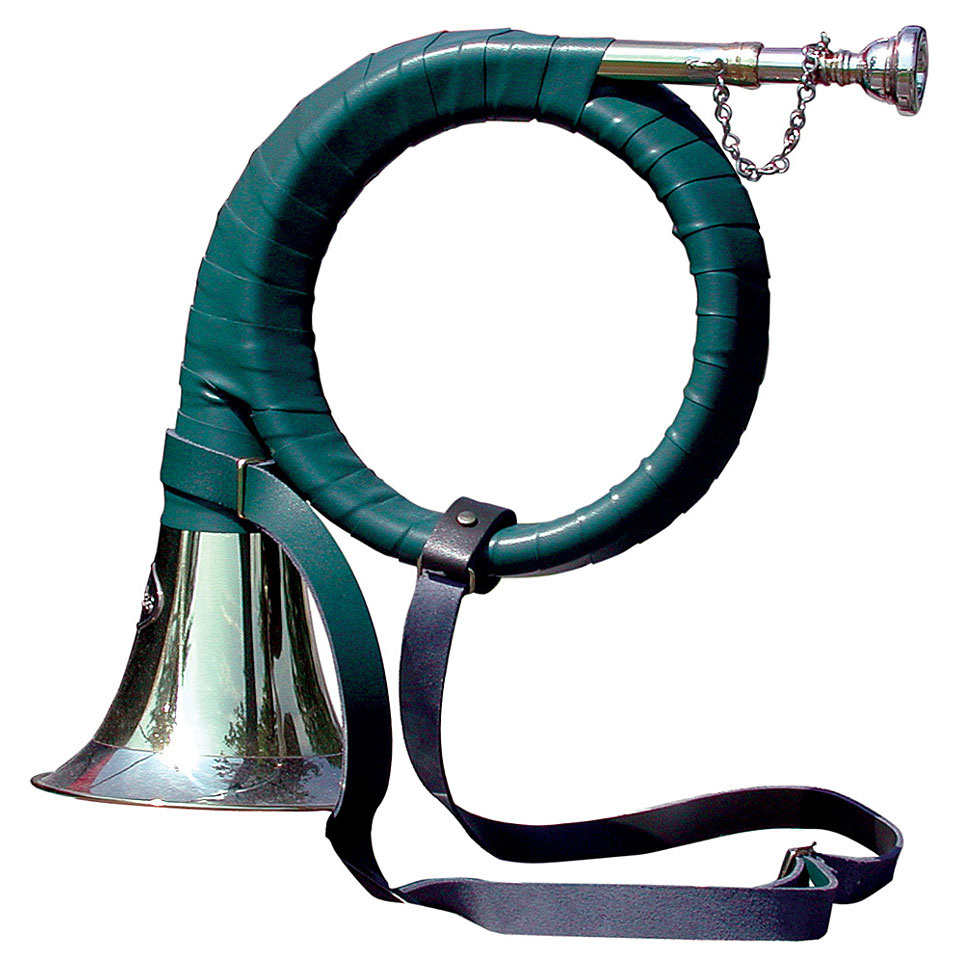
The oldest form of hunting horn was made from the horn of a cow or other animal horn-bearer and produced only one tone. The German hunting horn, the “Fürst Pless” horn, named after the princes Von Pless, originated around 1880 from the small kavalarie horn, an army horn. The “Fürst Pless” horn is a typical signal horn with a tonal range of around 5 notes. It is almost always used by hunters on foot and there are 45 hunting signals.
Yacht
The Parforce Horn, the Plesshoorn and the Taschenjagdhorn are now used to communicate with during a hunting day (the start of the drift, end of shooting, collecting floats and the halalli). If there has been a successful hunt, the horn is used at the tableau to blow the death signals. During such a hunting day, the horn is also used to greet each other, to blow ‘zum Essen’ and to say goodbye.
Repertoire
With the German Hunting Horn, Hunting Signals are transmitted earlier. For example, if only one large deer has been released, and it has been shot, the other hunters will be notified by the signal “Hirch Tot” (Large deer may no longer be shot). Or if during a drift a piece of game is shot sick, the signal “Call for the dog” (Hunderuf) puts the sweathounds to work.
More info at the Dutch Hunting Horn Blowers with a complete history of the Hunting Horn.
A Belgian site about the German Hunting Horn near Horrido.
And some scores with Jachthoorngroep Keizer Karel
Associations
Here is an overview of the Hunting Horn Associations in Flanders.
- Antwerp Hunting Horn Association – www.kajk.org
Johan Van Roey – info@kajk.org - Botermelck-La Garenne – www.jachthoorngroep.be
Patrick Vernaeve (Chairman) + 32 495 200 354 – patrick.vernaeve@telenet.be - Game guard : https://www.jachtsite.be/jachtwacht Koen Termont – 0477 70 80 16 – koen.termont@gmail.com
- Royal Hunting Horn Circle Huntermasters Sint-Hubertus Brasschaat – www.jachthoornbrasschaat.be
Dirk de With – +32 485089162 – dirk.de.with@telenet.be - Fugamus – www.fugamus.be
Roger Vinck – +32 0473 96.24.27 – info@fugamus.be - The companions of Saint-Hubert – www.degezellenvansinthubertus.be
Marc Ploem – +32 495 548 202 – marc.ploem@pandora.be - Greenfield – www.thegreenfields.be
François Cnapelinckx – +32 52 304834 – manager@TheGreenfields.be - Horrido – http://www.barv.be/jachthoornblazershorrido/
- Halali – http://users.telenet.be/bruno.gils/halali-jachthoorngroep.html
Eugeen Maris – +32 479 514 795 – info@halali.be - Hunting Horn Corps KSA Geraardsbergen – www.ksageraardsbergen.be/fanfare/jachthoornkorps/
Robrecht Van Lierde – +32 485 94.82.90 – robrecht@ksageraardsbergen.be - Arenberg Hunt Masters www.jachtmeestersvanarenberg.be
Jos Geeraerts – +32 476 478224 – info@jachtmeestersvanarenberg.be - Hunting horn group Waldo www.jachthoorngroepwaldo.be
Jan Van Herck – jan_van_herck@hotmail.com - Rallye Westrode – www.rallyewestrode.be
Erik Moens – +32 476 26 88 40 – contactpersoon@rallyewestrode.be - Rallye Ypara – www.rallye-ypara.be
rallye.ypara@gmail.com - Hegenwald
Contact person and musical direction: Guido Ceulemans
Bundersstraat 2 2235 Westmeerbeek
0468 276 734
ceulemans.guido@telenet.be
From the Hunting Horn Group Waldo we received the following addition:
We mainly play the large parforce horn in E/B, sometimes in combination with the small Fürst Pless as well as the Ventilhorn. We have long since stopped limiting ourselves to playing 5 tones and the death signals, as described on your site. What we perform goes just a little further than that, we even perform works by well-known great composers such as Rossini, Wagner… and in this way try to make the difference with the other sometimes monotonous hunting horn groups. We hardly dare to doubt that this chosen path works, so we are pleased to note that we are gaining more and more interest from the point of view of music lovers.
No permit yet?
Jachtexamen.be is the online learning environment for hunting, providing optimal exam preparation.