


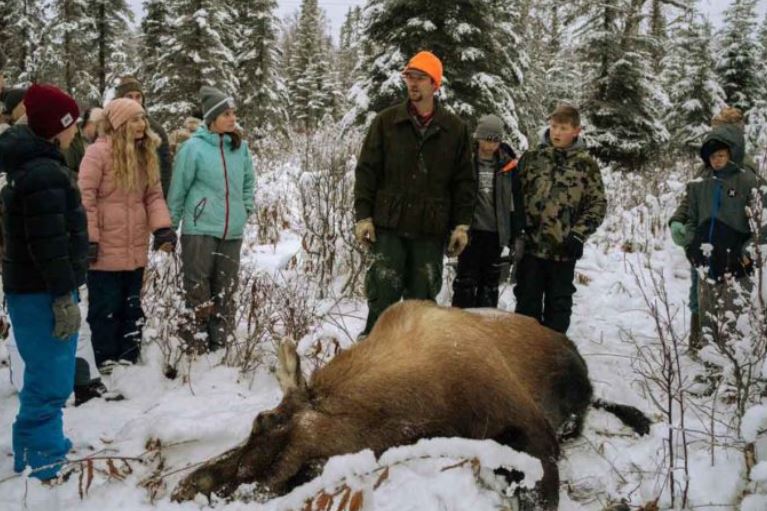
A small group of Alaskan high school students participate in a hands-on class on hunting and processing food from the land.
NIKISKI, Alaska — Before dawn on Nov. 11, 10 students from Nikiski Middle and High School gathered with their teacher, Jesse Bjorkman, in this small community on the Kenai Peninsula to prepare for a moose hunt.
Divided into five vehicles, the group traveled about 15 km to the Nikiski Escape Route, a gravel road that connects Nikiski to the city of Kenai. As the students slowly made their way down the snowy road, they were able to observe from all sides and scan the edge of the spruce forests for moose.
Within five minutes, they had spotted one, but moved on when they saw a calf nearby. Ten minutes later, the students saw another moose, but left when they realized it was on a different hunting ground. Bjorkman reminded the group that “even in a hunt, if we don’t get an animal, it’s still a success. But within 45 minutes, at about 8:50 a.m., the group found a third moose, lying in a snowbank under a spruce tree.
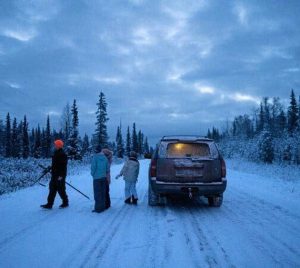
When his students gave him the green light, Mr. Bjorkman lined up and fired. It was a perfect shot. The students panted at the sound of the shot, and then laughed with excitement. The moose jumped and ran a few hundred meters into the forest before falling into a clearing.
It was the first moose hunt for 12-year-old Rex Wittmer. He said that finding the animal, stretching it and tracking it down was very exciting. Being a valuable part of society means learning to do things that people did before you, which is to carry on the tradition,” he said. Hunting must not disappear. It has been a part of our culture for many years. I feel like coming here was a good opportunity to keep that tradition alive.”


