

Who are those black robbers of the sky now?
Crows and jackdaws, like pigeons, are group animals. You can find them in groups of one or two, but also in groups of more than 100. If they are found in these large numbers, they cause enormous damage to fauna and flora, but also to the agricultural sector. The main damage they cause to fauna and flora is the killing of young rabbits, hares, birds, ducklings, chickens, etc. The main damage to the agricultural sector is the eating of newly planted maize, the chipping of the foil around the hay bales, the damage of fruits in times of drought (in order to get moisture), etc. They are known to be greedy birds: they only take a few bites of their prey and then go in search of their next victim.
Keeping the crows within acceptable numbers can be done by catching with funnel traps and Larsen cages, as well as fighting with a firearm. Today we will take a closer look at the latter, namely how efficiently the crow and jackdaw fight with decoys? Before you start placing your decoy and your cabin at random, there is some preparation beforehand.
Preparation is the key to success.
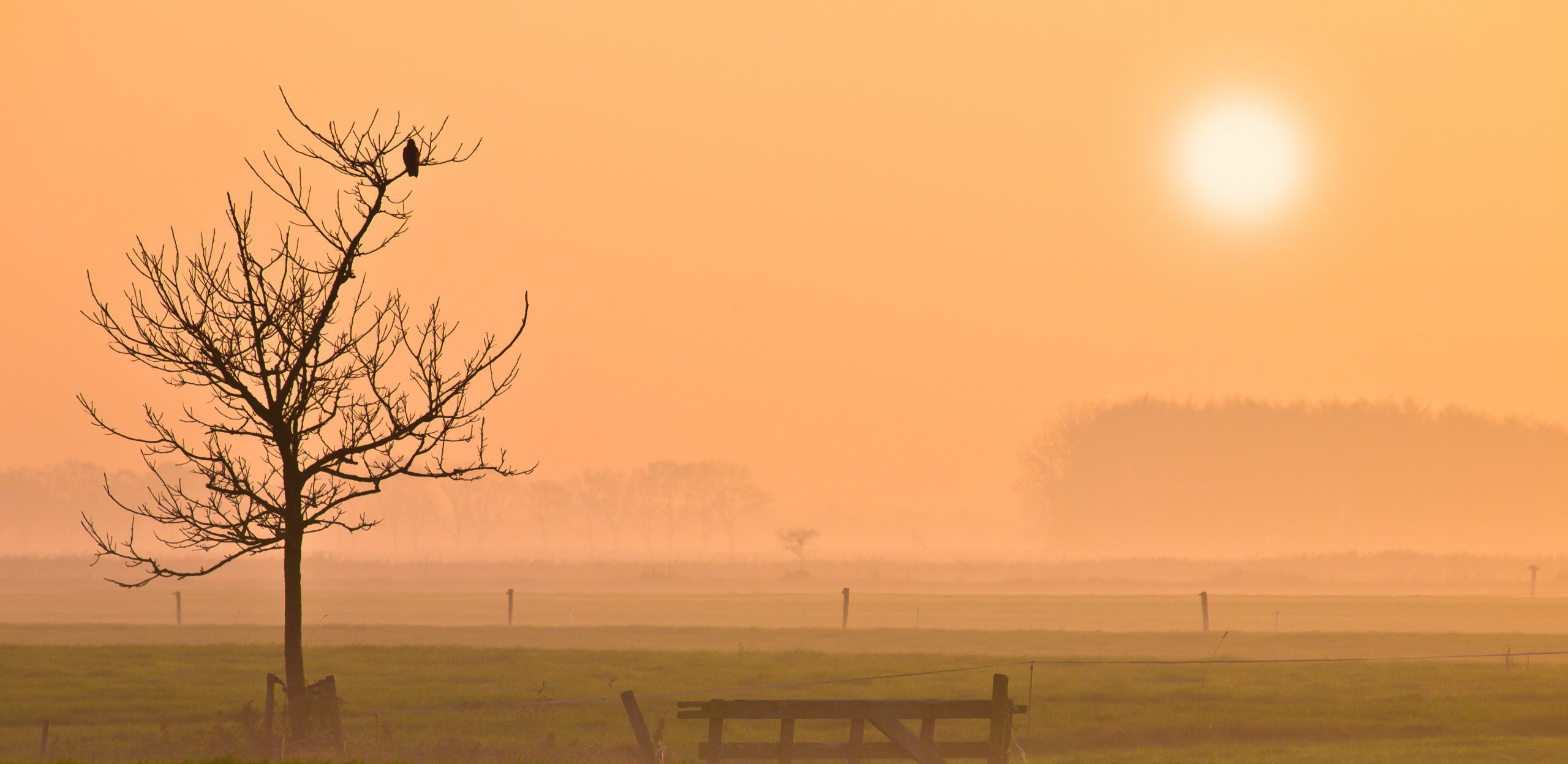
A few mornings in advance, I try to locate where the crow mass is an hour or two after sunrise. It is very important to note whether the crows are present in large numbers or not. If there are only a few, it makes no sense to place a gigantic decoy house of 20 crows. This is inefficient with suspicious crows. Less is more. Once the crows have been located, it is important to find a nice place where the crows can land easily, the view is enriching and where the hut easily blends in with the environment. The ideal environment is large meadows at the edge of the forest or where there are a few trees in the middle of the field. It is best to place the hut one or two days before the control. Below you can find some tips on how best to place and make your hut.
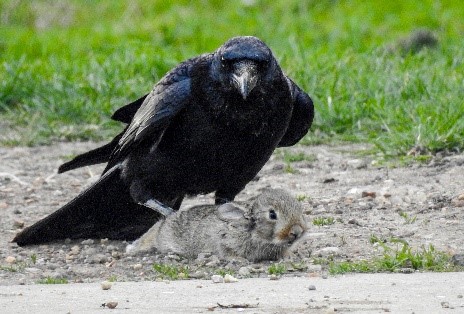
Crow with young rabbit
TIPS
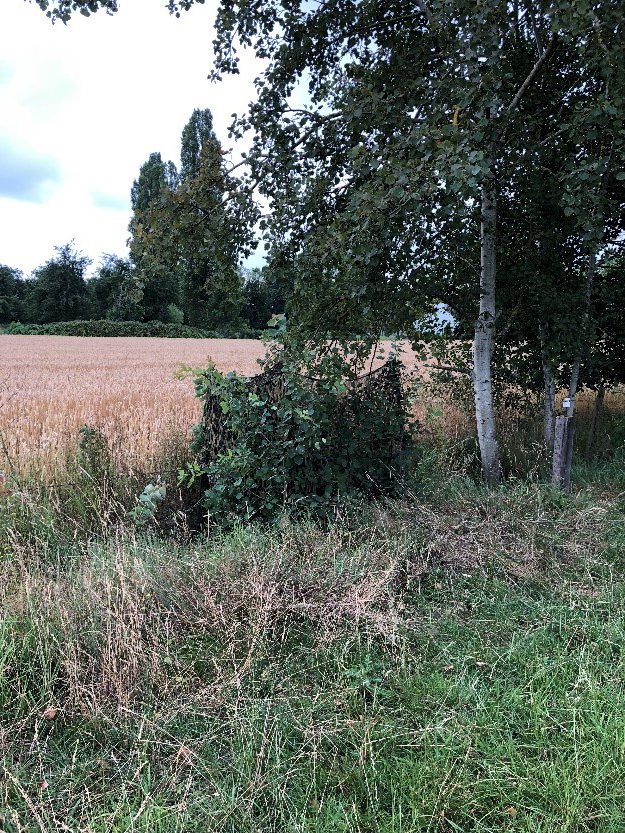
The day of control has arrived
The time has finally come, the day of control has arrived. To be able to hunt most efficiently, you have to get up early. I myself am on post an hour before sunrise to set out the decoy barn. You should never do that the day before. Crows have a good memory so they won’t fall into your trap.
The placement of the decoy barn is the most important thing after the hut. If it is set incorrectly, the result will be satisfactory. Always use real, but lifeless decoys, these work best. You place them neatly on the floor with their heads on a Y-shaped stick. If you don’t have real crows, use flocked decoys. If there is a little wind, make sure that the decoys can move freely on the wind. Movement in the decoy always helps. Never use live decoys, it is forbidden!
Just like pigeons, crows like to land against the wind. By placing the decoys in a U-shape or horseshoe, you decide where the crows will land. Place the horseshoe so that the landing zone is about 25 meters away from your cabin. For example, you can shoot the crows at ± 30 meters, just before they land. There are 2 reasons for this. Just before crows land, they fly steadily, and shotguns are deadliest at ± 30 meters (due to the spread of the hail).
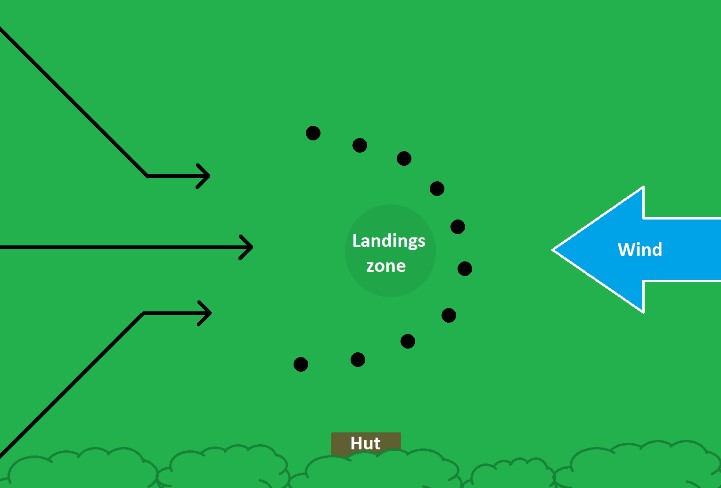
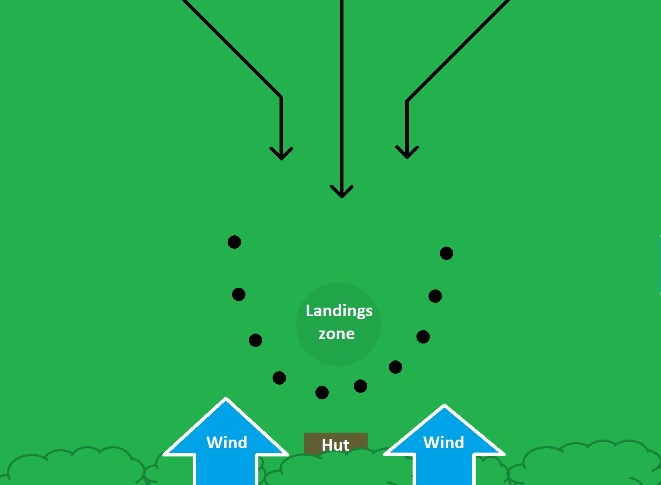
I determined the number of decoys the day(s) before. If I see that there are a lot of crows present, I usually place about 15 decoys. If it concerns only a few crows, about 5 decoys are normally sufficient.
The moment of truth
The hour of sunrise has passed and the first visitors can be stretched. Because of the limited space, I always shoot at control with a semi-automatic, an old browning A5 that I inherited from my grandfather. This has of course been converted into a regulatory three-shot. With a tipping run, you always have trouble reloading. Because I don’t do crazy shots from +40 meters and want to be sure that every shot is a deadly hit, I shoot shot shot number 5 – 32 grams with Rottweil steel game. The dog is always present to retrieve the stretched crows. Crows lying on their backs scare off other crows, so you can’t shoot.
Extra tips to avoid a rude awakening
- Use a decoy whistle to attract the attention of nearby crows and jackdaws. Just because you don’t see them doesn’t mean they aren’t there. For me, Sam Neyt’s decoy whistle works very efficiently.
- Place a decoy just above the treetop(s). That attracts the attention of crows that are very far. They also like that there is always a crow on the lookout (spotter). That gives them, in this case, a false sense of security.
- The more movement in your decoy barn, the greater the attraction. Therefore, place two gliders 60 to 80 meters from your hut. These are crows that hover a meter above the ground with their wings open. Place them so that they are facing the wind, which is the same direction as today’s crows are going to fall.
- If you notice that crows fly away abruptly at a distance of ±60 meters, check your decoy barn. Probably something is not right and there is a crow or jackdaw on its back with its wings open.
- If a crow approaches, try to keep hidden until the crow is within shot. Emerge calmly and shoulder. If you have followed the above tips carefully, they will usually not even notice you.
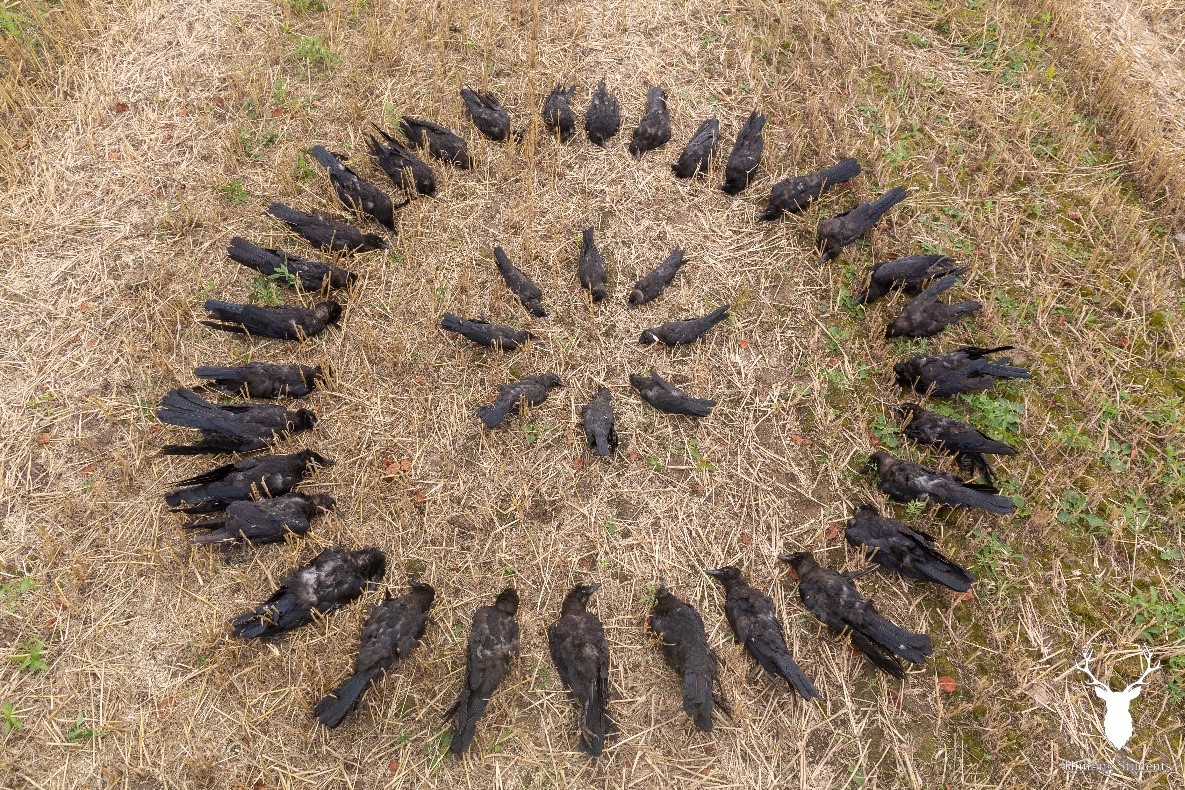
To conclude, the result of success.

Written by Belgian_Hunter
Ideal supplies for crows hunting
 www.huntingeurope.be