
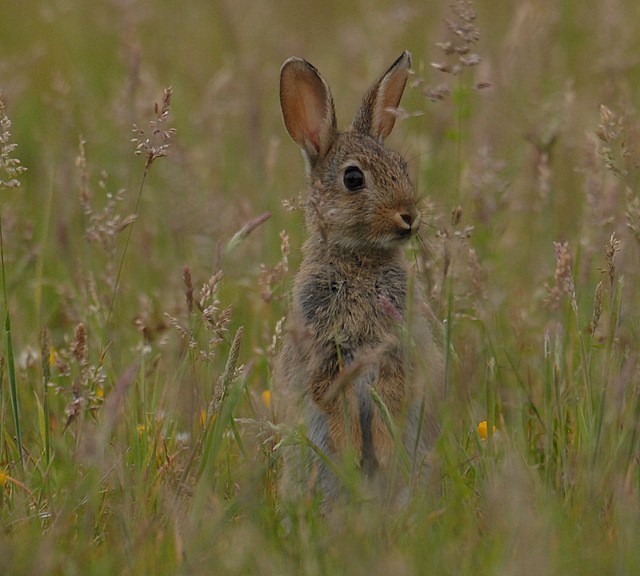
Hares are fertile all year round, except in October and November. Around the shortest day, the new breeding season begins, the peak of which is between February and May. During this period, large groups of hares are often seen, from 10 to 30 to sometimes as many as 75. During the day, the hares run across the bare fields. This spectacle is called ‘rattling’. Later in the year there is also pairing formation, but you don’t see this rattling anymore.
Early birds®
A rattle place is sufficiently clear (open area); Running after each other (‘floating’) takes a long time and happens over large distances. The mating behavior is interrupted by resting and foraging. Rattling mainly happens on dry soils, because wet soil makes running difficult. Usually one or a few rattles (males) start by driving up the nuts. This is contagious and more and more other hares are joining. The men do not run after one nut, it is more of a joint race.
- Blog
- The hunt
- Hunting Habitat
- Game & Dogs
- Hunting training
- Hunting Days
- Contact
 NL
NL FR
FR

© 2026 Hunting. Met liefde gemaakt door Are Agency