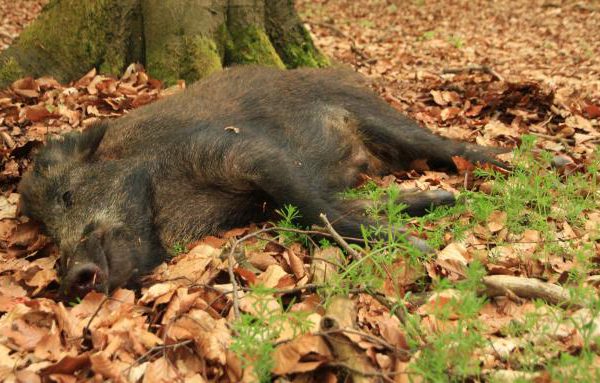


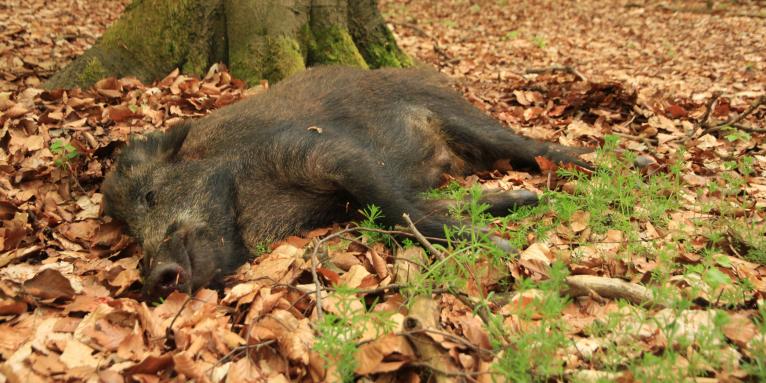
Polish State Secretary for Agriculture Lech Kolakowski says the government plans to hire a thousand professional hunters to hunt wild boars. The State Secretary is specifically responsible for the control of African swine fever.
The new professional hunters are given permission to shoot wild boars from cars in the vast Polish countryside. They also no longer have to hand in the carcasses to certified laboratories after taking blood samples, but must immediately bury them in pits and cover them with quicklime.
According to Kolakowski, radical measures are needed because the coming months are crucial. If no preventive measures are taken by March, an estimated 1.2 million wild boar piglets will be born and more than a million more will be born in the next litter in July. That is why the Polish fields must be depopulated of wild boars infected with African swine fever for sowing maize, is the motto.
Resistance from local hunters
The Polish minister hopes that the group of more than a thousand hunters can support the existing local hunting clubs, but the Polish hunters’ association rejects the new proposals. The hunters point out that shooting from cars has been prohibited for safety reasons so far. In addition, they complain that they have to hand in all carcasses to distant authorities, with only a small financial compensation per boar.
There is a lot of dissatisfaction among pig farmers and farmers in the countryside about the inadequate shooting by the local hunters’ associations. Although they doubled their culling last year from more than 400,000 to 800,000 animals, that is insufficient with an estimated size of many tens of millions of wild boars, according to farmers.
Biosecurity
The hunters say that the spread of African swine fever is not so much due to migrating wild boars, but to farmers and rural residents who, due to their lack of biosecurity, bring the virus into their farms themselves.
Due to African swine fever, many small Polish pig farmers have given up their activities in the past seven years. According to the Ministry of Agriculture in Warsaw, in 2014, when the infectious animal disease was first detected in Poland, there were still 179,000 individual pig farms with a total of about 10.5 million animals, which represents an average of 59 pigs per herd.
In 2019, the number of pig farms had fallen to 116,000. In mid-2021, the government still had about 92,000 farms with pigs, which corresponds to a decrease of almost half compared to 2014.