

Because the Flemish government does not follow its own rules, a number of wildlife management units are suddenly no longer allowed to hunt partridges. ‘Breach of word’, according to Hubertus Vereniging Vlaanderen.
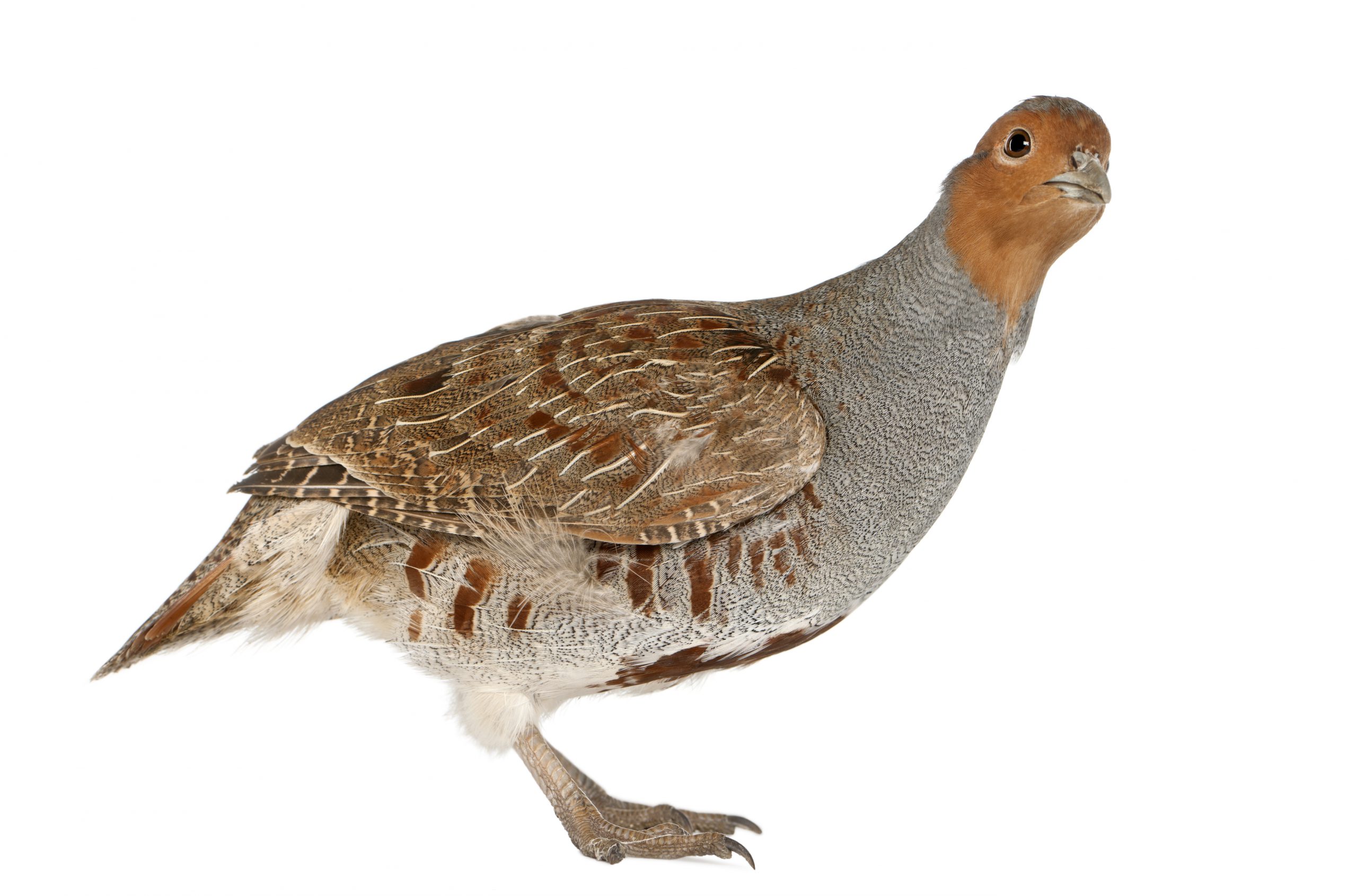
In order to be allowed to hunt partridge, a WBE must meet a number of conditions, the most important of which is the density of the number of farmland birds in the area of operation. If the population is sufficiently large (the famous three flocks per hundred hectares), the game manager may harvest a number of specimens.
Whether a WBE meets that standard, the hunting group is informed annually by letter from the Agency for Nature and Forests (ANB), the administration within the Flemish government responsible for hunting.
To make a decision, the agency relies on both the wildlife report and the fauna management plan of the relevant WBE. This way of working is also described in the hunting regulations.
The opening of the partridge hunting season starts on Wednesday 15 September, and runs until 14 November.
No consultation
This season, 37 wildlife management units were allowed to hunt partridge. A low number, according to Hubertus Vereniging Vlaanderen, compared to previous years.
The reason for this decline is not due to the partridge itself, and possible local fluctuations in the stock, but has everything to do with the ’tilting’ of the new counting protocol, according to Hubertus Vereniging Vlaanderen.
“The cabinet of Flemish Minister of the Environment Zuhal Demir decided without prior consultation to include the results of that exercise in the final judgment,” explains HVV director Geert Van den Bosch. ‘While that makes no sense.’
Firstly, ‘the legal basis for imposing the protocol is largely lacking’, says Van den Bosch. ‘Nowhere in the hunting legislation is the new counting protocol listed as a tool to legitimize such decisions. So its use as a distinguishing element is at least legally questionable.’
Moreover: ‘The new partridge counting protocol, only rolled out in January this year after an emergency procedure, is not yet scientifically perfect. And its results are only reliable after a dataset of at least three years, so that comparison should be possible. The experts involved also acknowledge, by the way.’
And finally: ‘Demir said in previous communication that the results of the new counting protocol would not yet be taken into account as a decisive factor this year, and that she would take into account the hunting groups that for one reason or another could not integrate the new counting method. Not so.’
Government insults hunters
For Hubertus Vereniging Vlaanderen, this way of working amounts to a mockery of good governance, and a breach of word.
‘Changing the rules during the ride breaks confidence in the government,’ says Van den Bosch. ‘And that was already not solid in the partridge dossier, where it always has to come from one side – from hunting. But conversely, the administration and the minister refuse to communicate openly and transparently. For example, Hubertus Vereniging Vlaanderen has not yet been given any access to the processing of the counting data.’
Van den Bosch speaks of ‘an institutional distrust’ with regard to hunting. In this dossier, but also in others. ‘While the question here is: who spends all the resources out of their own pockets to sow soils into ideal biotopes, who feeds the populations in the winter, who keeps the predation short to give nests a fair chance, who participates in scientific studies, who convinces farmers to join in a positive story about the field bird? Not the government. But who will be served the bill? The hunting – the men and women who roll up their sleeves every day.’