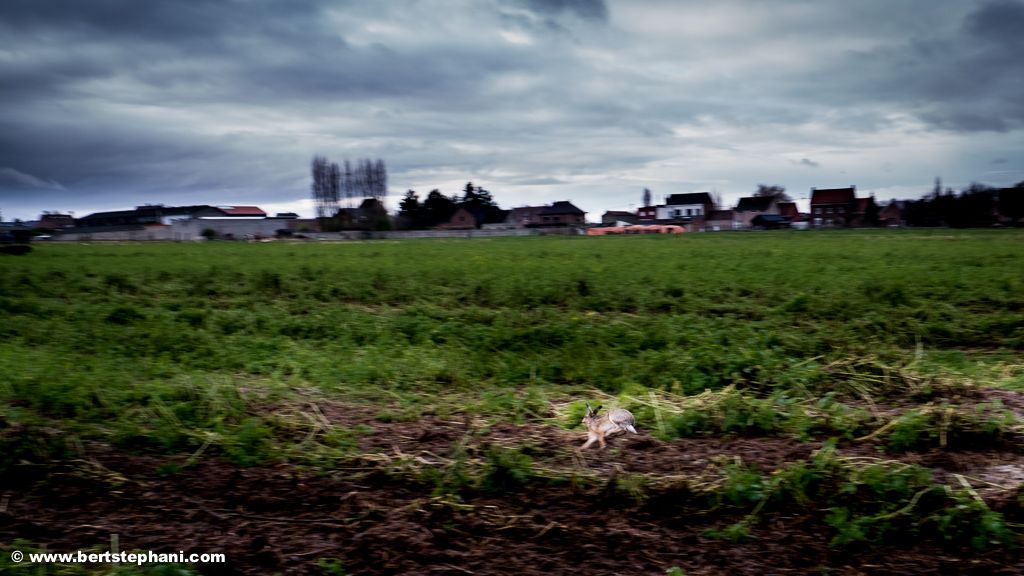


Weather conditions can have quite an impact on survival of these animals, but also, for example, on reproductive success. How do these effects on individual animals affect population dynamics ? To find out, we analyzed shooting data from the Netherlands and Germany over the past 28 years.
And as it turns out, not the harsh winter but the amount of rain in the Spring or Summer has a direct impact on wildlife.
More rain in the summer or fall appears to result in fewer hares the following year. With rabbits, the relationships appear to be more complicated: A spring with a lot of precipitation results in fewer rabbits. And a cold winter also results in fewer rabbits, but only if that winter was preceded by a spring with high precipitation.
The researchers combined these hunting statistics with weather data from the meteorological services of both countries. First, they analyzed long-term trends for both species. This showed that hares have steadily declined over the past 28 years in the Netherlands and Germany. The main cause of this long-term negative trend must be sought in the intensification of agriculture, although diseases, predators and weather are also known to influence the population dynamics of hares. Rabbit data show a decline after 1990 due to the advent of Viral Haemorhagic Syndrome. With the development of resistance to this disease, there has been an increase again in recent years.