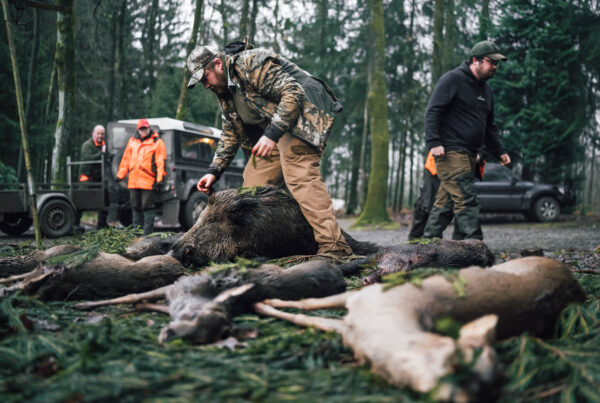


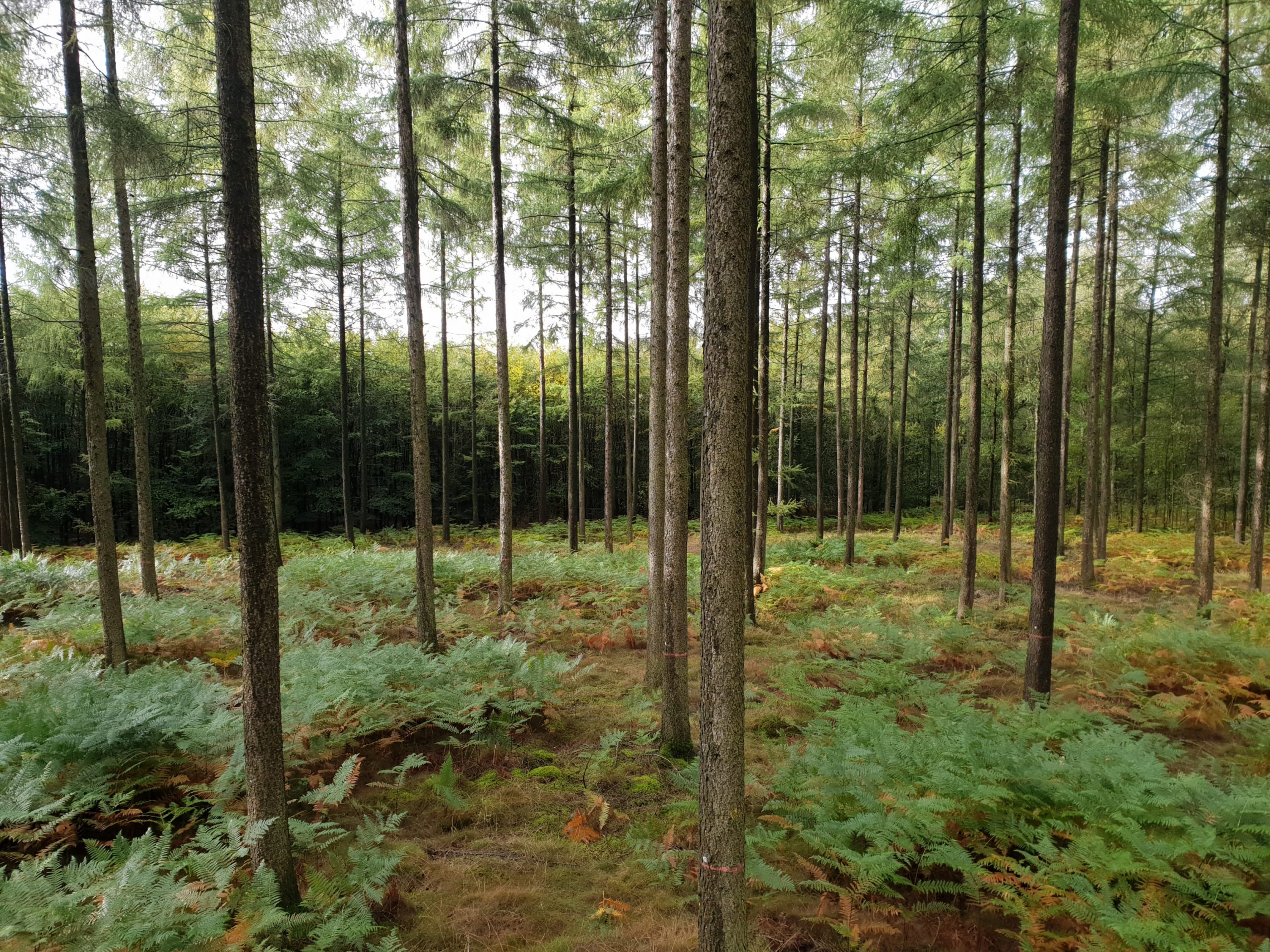
Now that the hunting season is in full swing, this is the right time to look at two different ways of pressure hunting. The first, the ordinary pressure hunt or manhunt, is already known to everyone, but there is also another form that has been gaining popularity in Belgium in recent years. We have seen this way for a long time in Germany, but it is now starting to occur more in our country as well. The silent pressure hunt.
There are many supporters but especially many opponents of this way of hunting because it is a lesser known and “amicable” form of hunting. Let’s make a brief comparison between these 2 ways.
A hunting area where silent pressure hunting has been carried out for several years is Oignies-en-Thièrache. Here, the government has launched a “pilot project”, as it were, to see what the results are like of a silent pressure hunt in Belgium. But how does this all work?
Placement of posts
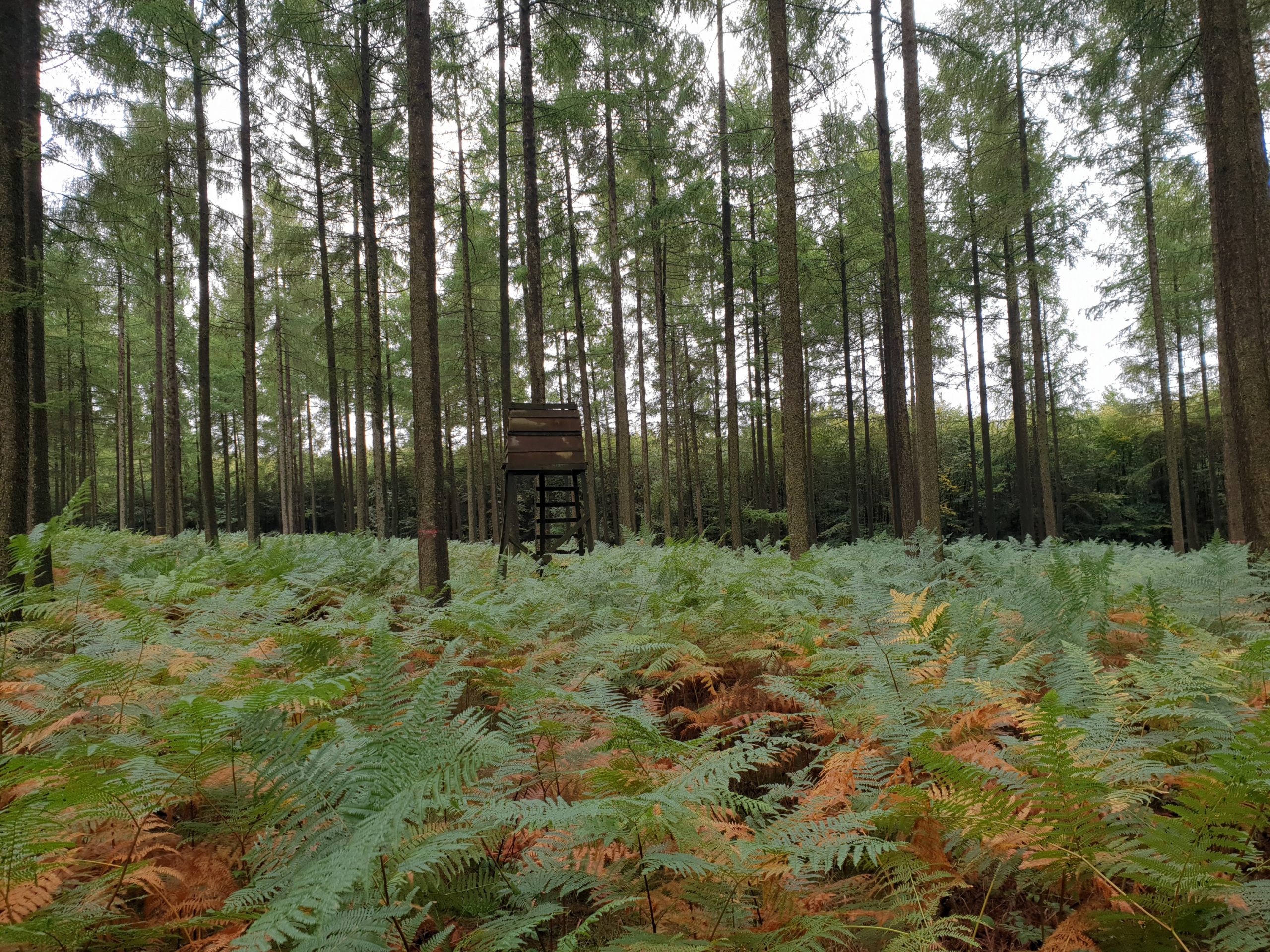
At each post there is a high seat of 3 to 4 meters high. In contrast to the normal drive hunt, the posts during a silent pressure hunt are not around the drift. On the contrary, they are spread out inside the drifts in tactical places where game often passes. Of course, this gives the game a better chance of escaping unnoticed.
As you can already deduce, several urges are done at the same time. After all, it would not be possible to post 30 fighters all in a drift on 30 different high seats. For example, the entire hunting area in Oignies is divided in two, with the southern part being hunted in the morning and the northern part in the afternoon. Compared to the driven hunt, not just a few drifts are done, but the entire hunting area.
Addressing the game
Because each hunter is on an open high seat, it is allowed to shoot 360° around. The 30° rule therefore does not apply. The maximum distance used is 50 meters. Game that passes by at a further distance can be announced by me via the radio but may not be shot at. This is too dangerous for the floaters.
In addition, the game may only be addressed if it is stationary or passes slowly walking (as a rule, 3 has legs on the ground). This way of addressing game should ensure that less game is shot sick and research is little or not applicable.
The way of floating
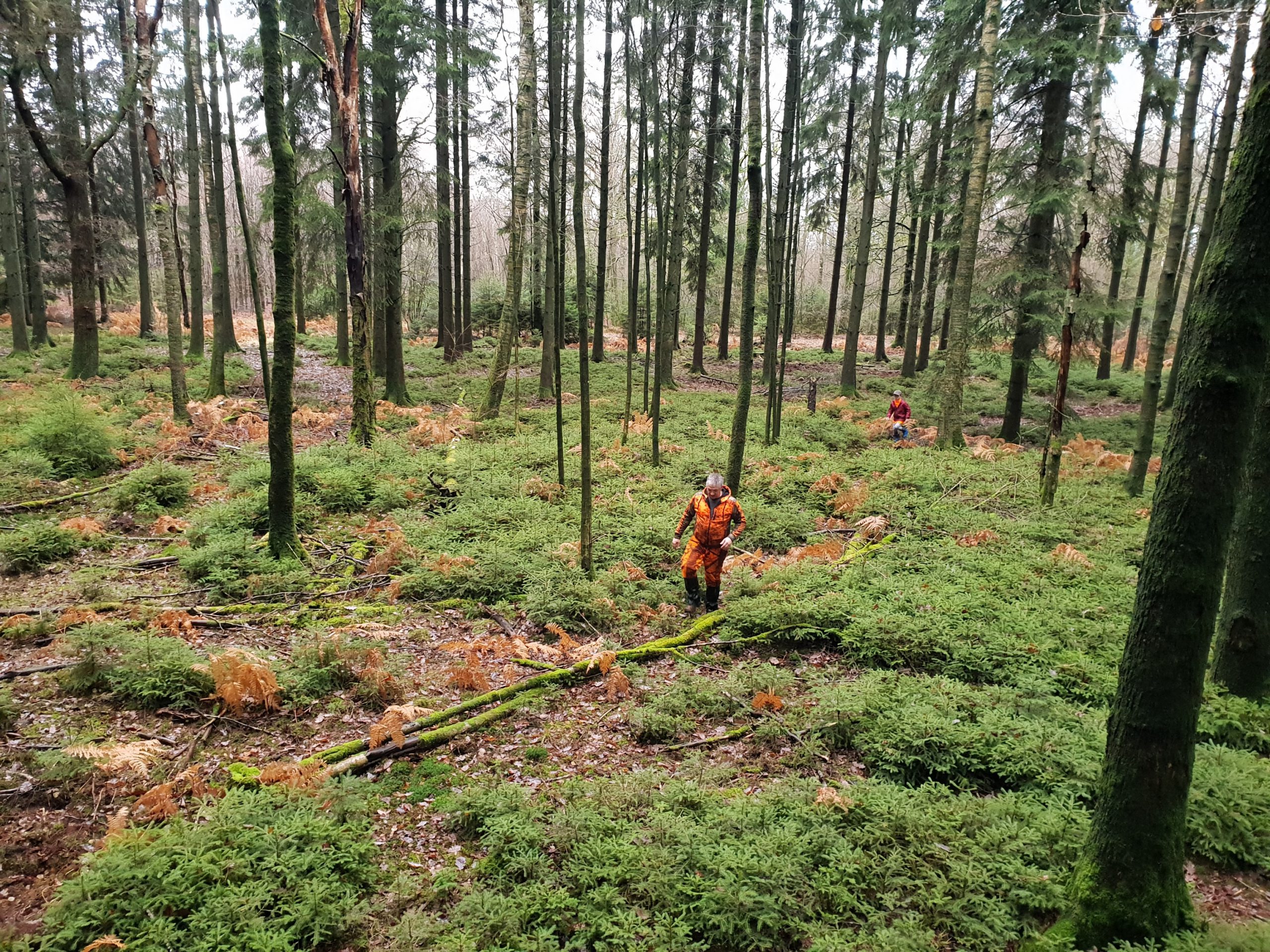
During the drive hunt, all floats go through the drift in one line, this is not the case during the silent pressure hunt. Here they are just divided into several small groups. Predetermined pieces are then treated up and down by the floaters. This keeps the game moving and does not quickly go back into the cover.
It is not the intention that the floats go through the drift with a lot of noise. There is only an occasional call to let the hunters know where they are at that moment. This clearly results in lower hunting pressure in the area.
Floaters with dogs?
No dogs are used during a silent pressure hunt. The floats are therefore dependent on themselves to get the game moving. Of course, this does not make it easy. Certainly not when we are talking about dense coverings where it is already more difficult to get the game moving with dogs.
If dogs are allowed to be used, these are usually smaller specimens that do not sustain long “chases” with the game.
Despite the fact that in the beginning many hunters were not in favor when silent pressure hunting was introduced, this is different today. The results are certainly there and there is not a single hunting day that there is still a post available. This indicates that this form of hunting is appreciated and gaining popularity. Personally, I am also in favor of it myself, but I would find it very unfortunate if all driven hunts in Belgium were to be replaced by silent pressure hunts. Let’s say that the adrenaline level goes even higher during the regular drive hunt.
Finally. If you ever get the chance to experience a silent pressure hunt, don’t miss this opportunity and enjoy this form of hunting.