

Damien Foundation calls for vigilance for tourists traveling to risk areas
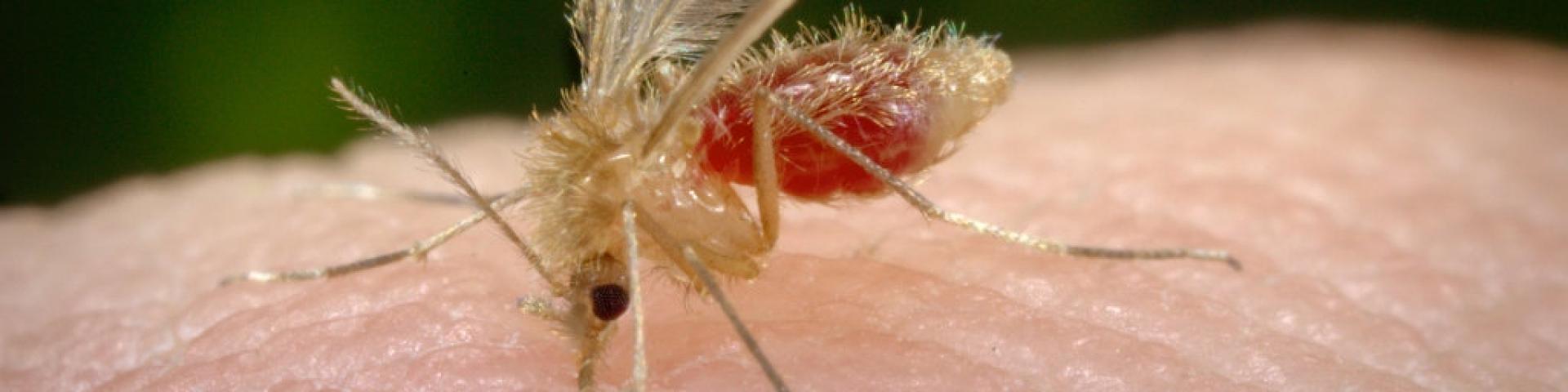
Damien Foundation warns that the ‘neglected’ tropical disease leishmaniasis also occurs in Belgium. The disease is not very well known, but last year the Institute of Tropical Medicine in our country treated about 30 patients who contracted the disease abroad. That is twice as many as ten years ago. Leishmaniasis is a parasitic disease transmitted by a small sand fly. Especially those who travel to tropical countries with high temperatures and high humidity should be vigilant. But also in popular holiday countries such as France, Spain, Italy, Morocco and Croatia there is a sandfly that can transmit the disease.
Leishmaniasis occurs in three forms. About 80 to 90% of cases involve cutaneous leishmaniasis, in which chronic ulcers develop on the skin. The sores are not fatal, but cause serious injuries and need to be treated. The most severe forms, visceral and muco-cutaneous leishmaniasis, are fatal. About 15% of patients are at risk of visceral leishmaniasis, a form that affects the internal organs, mainly the liver and spleen. This variant is mainly found in India, Bangladesh and East Africa. A large minority, about 5% of patients, develop mucocutaneous leishmaniasis. This form affects the mucous membrane in the mouth and nose and is only found in Latin America.
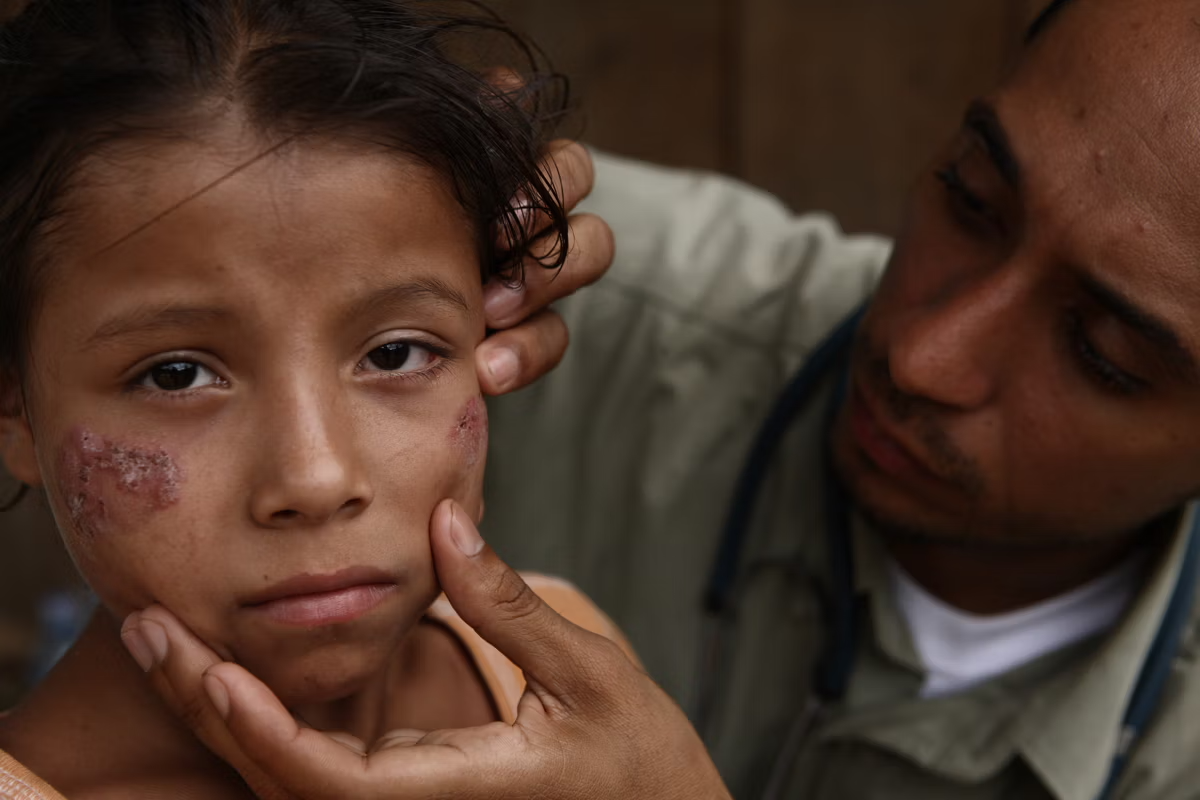
Caution for those traveling to high-risk areas
Leishmaniasis is estimated to affect around 600,000 to 1 million people worldwide each year. The sand fly that transmits the disease by stinging its victims lives mainly in tropical areas such as South America. But also in France, Spain, Italy, Morocco and Croatia, popular holiday destinations for many Belgians, there is a risk of infection after a sting by a sand fly. In southern Europe, between 12,000 and 20,000 people were infected with the disease in 2022, according to an estimate by the World Health Organization.
In our country, there is no risk of infection for the time being, although about 30 patients were treated last year after contracting the disease abroad. That is double compared to 10 years ago.
“Leishmaniasis is called a ‘neglected’ tropical disease because it mainly affects vulnerable populations and is given too few resources to provide the right care and research. Moreover, you cannot contract the disease in our country because it is not transmissible from person to person. All patients treated in Belgium traveled to a high-risk area and were stung by an infected sand fly. In addition, due to the increasing migration, we are also seeing more and more migrants from Syria or Afghanistan, among others, who are infected. They often travel through different countries, so it is not always clear where they were stung.” Dr Emmanuel Bottieau, head of the tropical diseases department at the Institute of Tropical Medicine
The warmer and more humid, the more suitable the climate for the sand fly to survive. Global warming can therefore cause the insects to spread further.
Prevention and cure
There is no vaccine against leishmaniasis and insect repellents do not offer sufficient protection either. The Institute of Tropical Medicine recommends wearing clothing that covers arms and legs and being especially vigilant for the symptoms. If you notice strange wounds after a trip, it is best to consult your doctor or the Institute of Tropical Medicine. If you want to check whether you are traveling to a risk area, you can check it on the site wanda.be.
Heat therapy: 96% of patients heal after one treatment
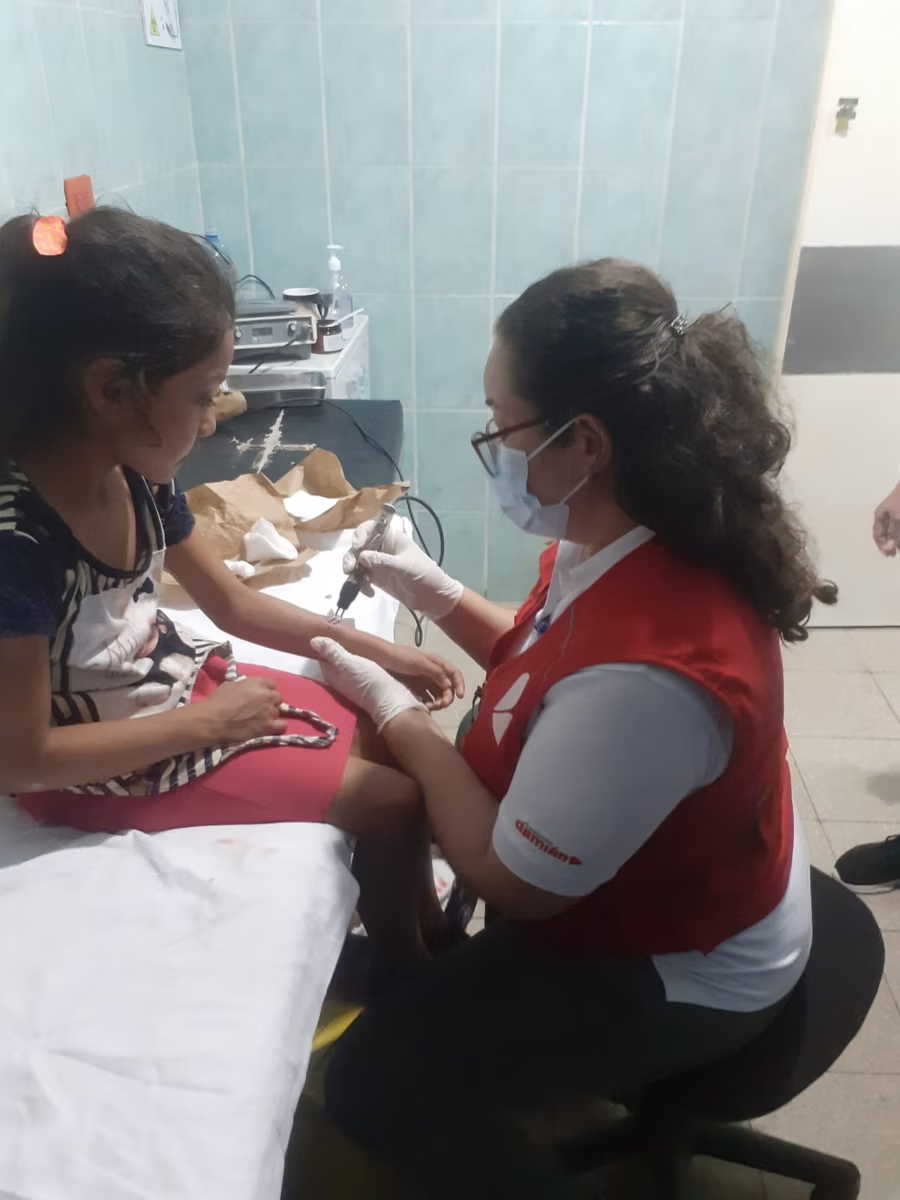
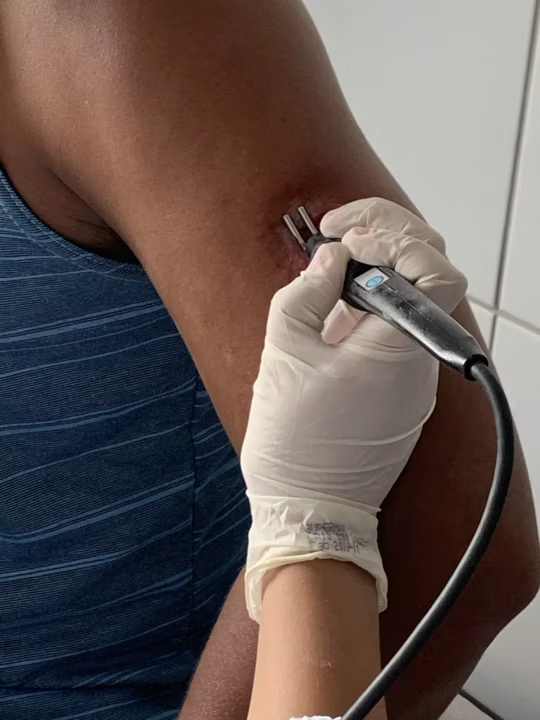
Last year, the Damien Foundation started a pilot project in Nicaragua to treat patients with cutaneous leishmaniasis with thermotherapy after a small-scale observation project in Guatemala yielded good results. In heat therapy, the leishmaniasis wounds are treated with warm electrodes at 50°C. One session is usually enough to destroy the parasites in the wound. The new therapy replaces the usual treatment with injections. These injections are painful, have to be repeated every day for a month and the toxic substances in them cause serious side effects. Moreover, the injections are less effective because only 66% of patients in Nicaragua are cured, even after multiple treatments.
The results with thermotherapy seem promising: 96% of patients were cured after just one treatment with the heat rays.
“Between June and December 2022, we treated 109 patients with thermotherapy in the Jinotega region of Nicaragua, where leishmaniasis is particularly prevalent. The results we achieved there are impressive. No patient reported any side effects. And because the treatment doesn’t hurt either, the good news spread rapidly among the local population. Anyone who suspects they are infected now also dares to ask for medical help much faster. The detection rate in the area increased by 125% in 2022 compared to the previous year. That is a wonderful result. We therefore want to make the treatment method more known and apply it in other regions.” Dr Manuel Bravo of Damien Foundation
Vulnerable groups may also receive heat therapy because there are no side effects.
Successful heat therapy from Damien Foundation also in Belgium?
In addition to Nicaragua, the Damien Foundation is currently also treating patients with heat therapy in Guatemala. But the treatment also deserves more attention in Europe.
“Published studies show that thermotherapy is successful as a treatment for cutaneous leishmaniasis in Latin America. This treatment method is shorter, cheaper, non-toxic and more popular compared to the standard treatment that consists of daily injections for at least 20 days. This explains why the Pan American Health Organization (PAHO) recommends thermotherapy for adults, as well as for people who are toxic to injection treatment, such as pregnant and breastfeeding women, and people with weakened immune systems or heart disease. We are committed to raising funds so that we can purchase additional machines and expand the application of thermotherapy. In addition, discussions are ongoing with the Institute of Tropical Medicine in Antwerp to consider thermotherapy in Belgium for travelers returning from Latin America and for the vulnerable groups mentioned above.” Dr Nimer Ortuno Gutierrez, medical advisor at Damien Foundation