

One of our editors had received some roebuck trophies from last summer from the taxidermist. To our surprise, the two roebucks that came from the same hunting grounds in the Alps had grandels. One buck +5 years old had very nice ones.
The grandels, also called “hooks”, are remains of strong fangs that the ancestors of the roe deer used to possess. It may occur more often in certain hunting grounds, as research has shown that grandel formation can be hereditary. Humans can determine whether a roe deer has grandels by pulling up the upper lip at the shot piece so that they can be seen in the jaw on the left or right side. They can also be loose in the gums. Grandels occur in both bucks and goats, but they have been most commonly observed in bucks.
They are small pin-shaped teeth of 5 to 20 mm long with a diameter of +- 2 mm.
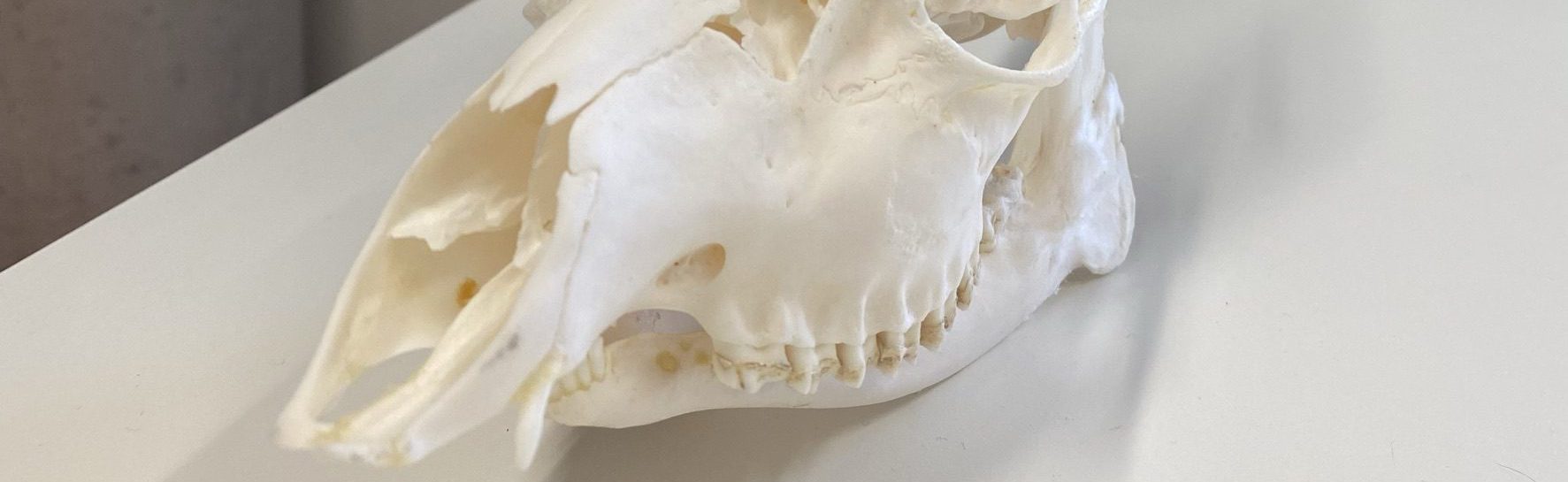
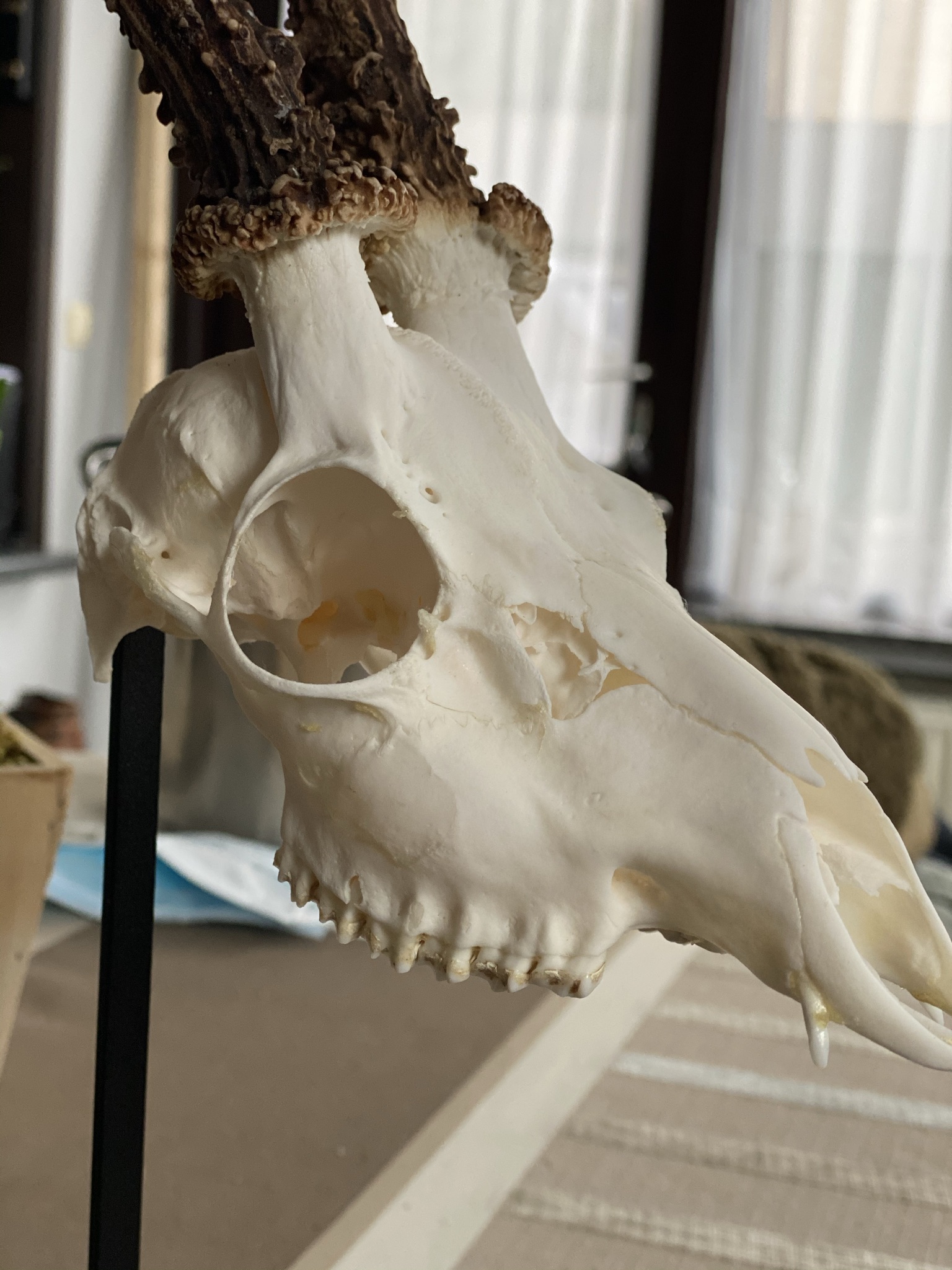
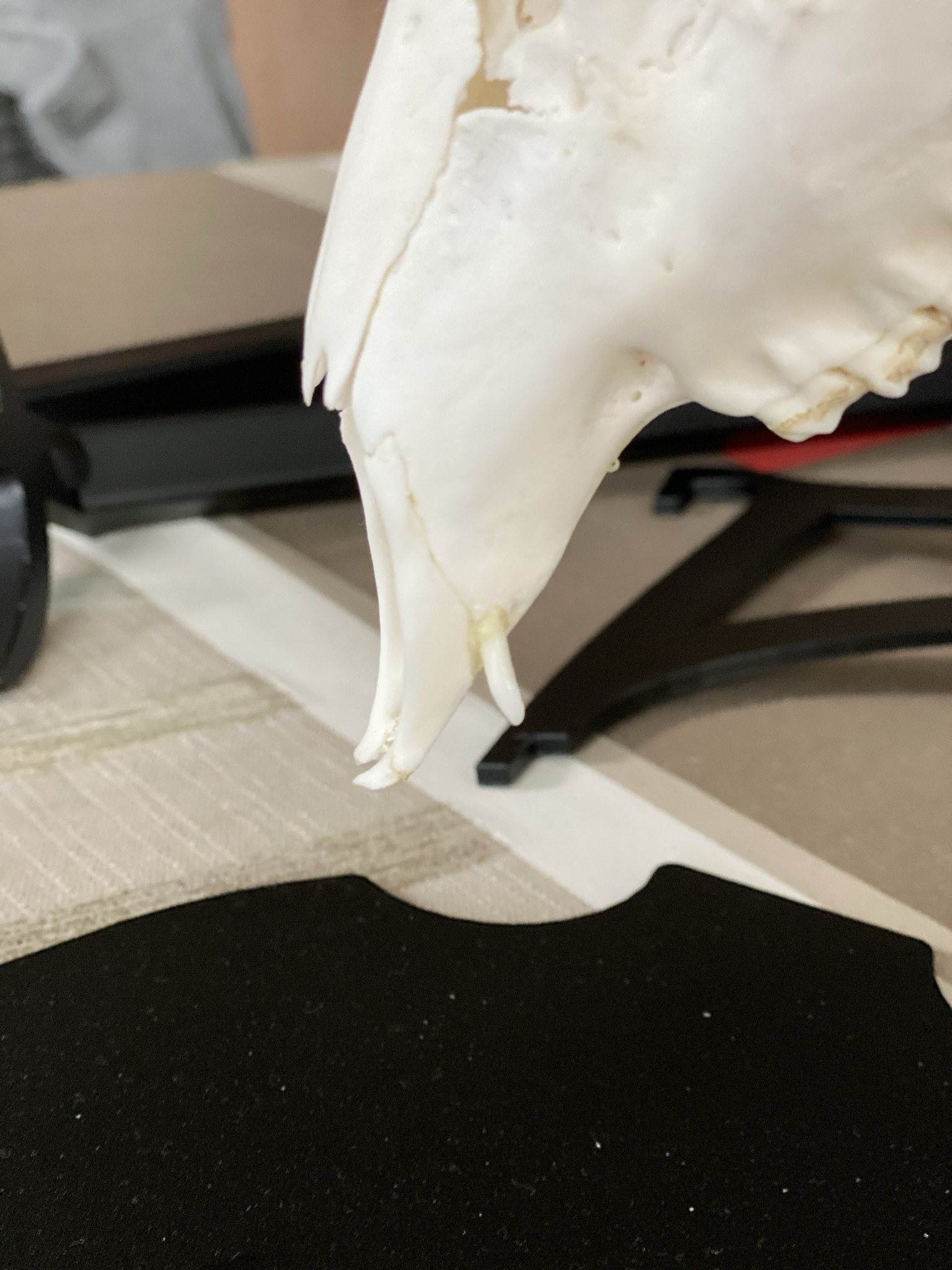
Since the canine is already formed in the milk teeth, it can happen that 2 canines are found in the tooth surface because the milk tooth has not yet fallen out and the permanent canine has been formed.
The distant ancestors of the roe deer must have had tusk-shaped canines, as is still the case with the antlerless Chinese waterdeer and the muntjac, also found in Flanders, these with short antlers.
With the development of antlers, these canines lost their function as a weapon, so that they have slowly been returned to the small pins of today that no longer have a function. This compensation theory from tusk to antler as a weapon is not taken for granted by everyone, but there is still a lot to be said for it.
It is interesting to know that red deer that have shed their antlers threaten with their fangs when it comes to quarrelling.
So they are still aware of these former weapons.
If you shoot a roebuck that turns out to have grandels after examination, it is worth sawing off the skull as wide as possible so that these canines are preserved.
Explanation: G.IM. Koenderink