

Hunting with bow and arrow is nothing new, we have been doing it for about 50,000 years. Even though firearms have replaced the so-called simple stick and string, the bow has never left the stage.
Not only native hunters use bows and arrows today, but also a new generation of hunters outwit their prey with a modern version of the bow. These bows are made of modern materials and technologies that make them not only very accurate but also powerful enough to completely traverse an African buffalo. It is therefore not surprising that this trend, which originated in America and is experiencing exponential industrial growth, also quickly reached European territory.
France and Finland were the first European countries to allow the use of bows and arrows. More and more countries are following suit, which is why bow hunting has now been included as a legal means of hunting in more than half of the European countries.
Archery in Belgium was only allowed in Wallonia. A grey area in the Walloon hunting legislation, namely the use of the words “chasse a tir” does not specifically indicate that the bow is prohibited and therefore allows it to be used legally. Despite some doubts, this has now also been officially recognized by the government. It is estimated that of the 15,000 hunters, there are about 1500 bow hunters in Belgium.
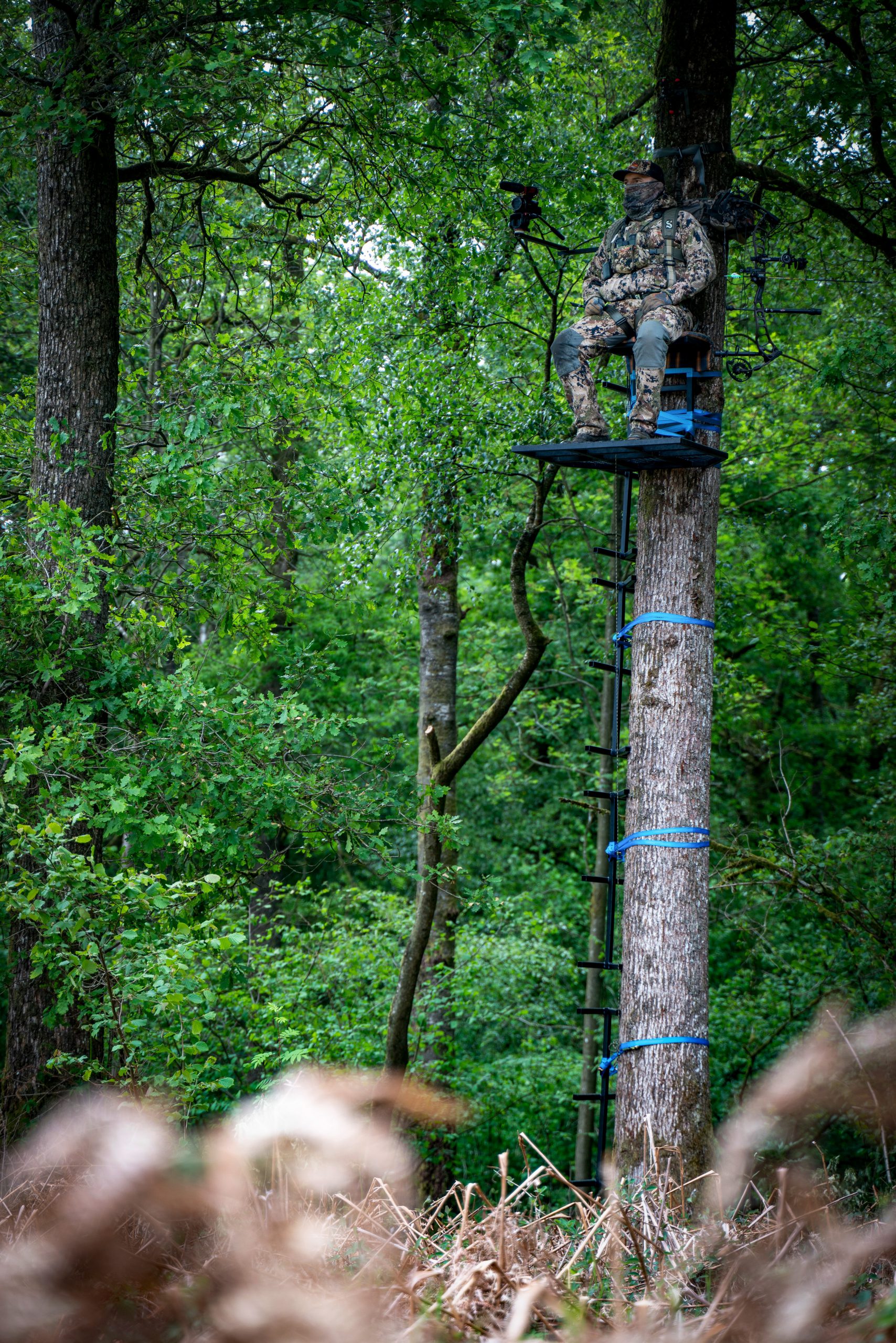
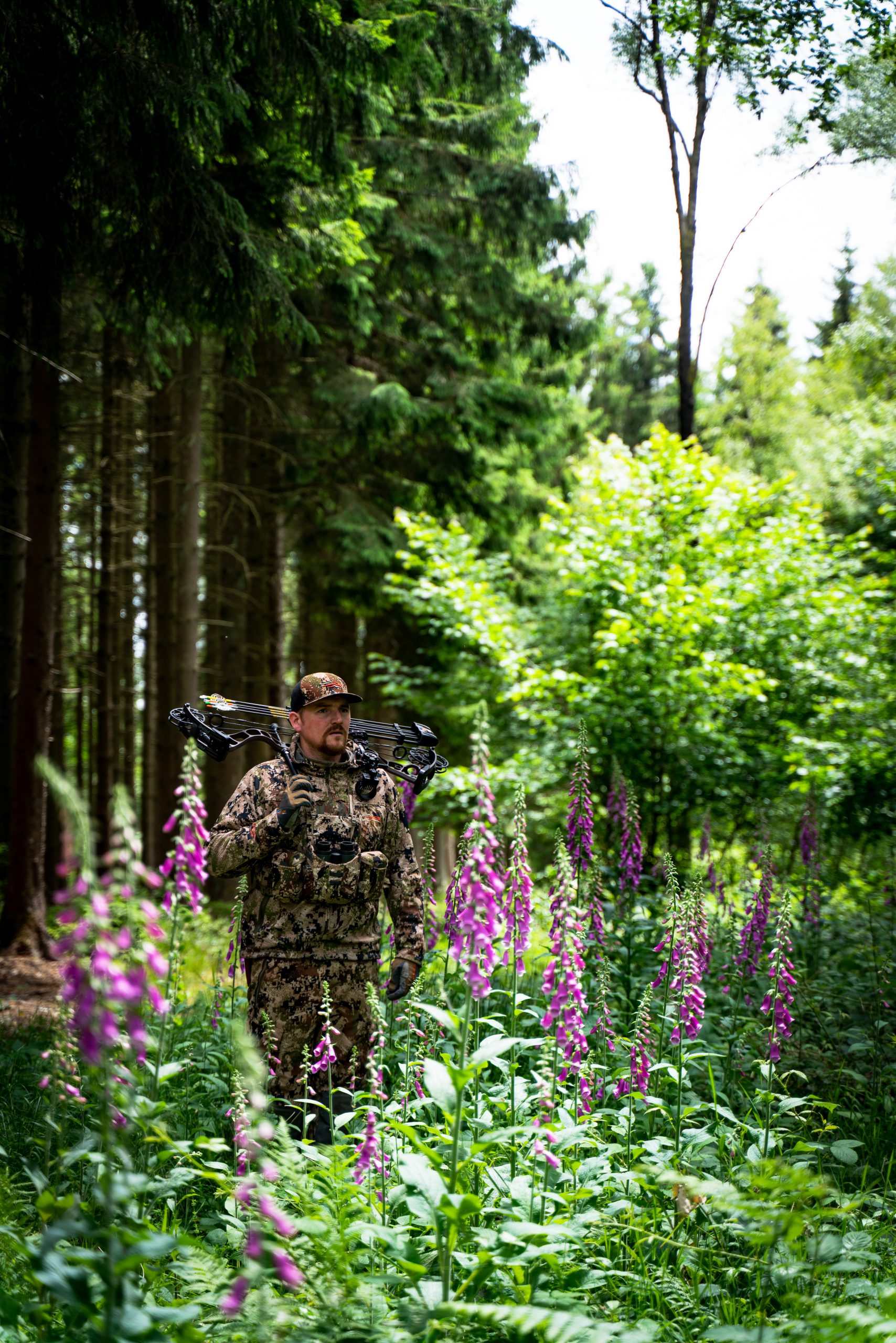
This year, the government has made a slight adjustment to the legislation by no longer allowing the bow on the shooting line during traditional drive hunts. This is because the bow is not really adapted for quickly overflowing game to address.
Officially, no additional training or license is required to practice archery in Wallonia. You only need to have your normal hunting license (where you only have to prove that you can handle firearms). We therefore recommend that you follow a training course at the Flemish Bow Hunting Association to be well prepared for bow hunting.
Hunting with a bow is not yet allowed in Flanders. The big problem here is that the legal hunting weapons to be used are described in the law, making adding or amending this law a political matter. Together with some friends, we try to lobby here so that bowhunting is also legalized in Flanders.
For me and many bow hunters, it is the proximity to the game that makes bowhunting so attractive. The average contact distance is below 30 m and shots at 10 m and closer are common.
That being said, it takes a lot of training and preparation to land a good shot with your bow. This is one of the reasons why many hunters change from the “security of the firearm” to the “handicap of a bow”.
In addition to the fact that the bow is a very safe weapon, the bow makes almost no noise so that the game is also less disturbed compared to a shot from a firearm. Some less informed people would conclude that this makes the bow a perfect weapon for poachers, but nothing could be further from the truth. It is almost impossible to use the arch at night from a car. You need a lot of training and you run the risk of leaving evidence like an arrow. Poachers need something small and fast, easy to use and tuck away. Usually these are small calibres firearms with silencers and scopes on them, even with night vision goggles.
In Belgium and France, it is rare or almost impossible to detect poaching using bows and arrows.
I often get asked which animals can be hunted with the bow.
The answer is simple!
Almost all huntable species can be successfully hunted with the bow. For many bow hunters but also for me, roebuck is one of the most beautiful huntable species.
Any hunter who hunts roebuck and has a selective management plan knows that this is a “full-time job”. A bowhunter who goes out unprepared will have little to no success and certainly not on a beautiful old seasoned buck.
A good hunter who wants to stretch his specific buck must find a good balance between work, family and hunting. It is not only the countless hours in the high seat or bersen, but also the time you have to search for your buck out of season by placing and moving wildlife cameras, looking for sweeping places and sleeping places, that are important. Not to mention the long days and short nights where we have to adapt our tactics and strategies to wind and weather.
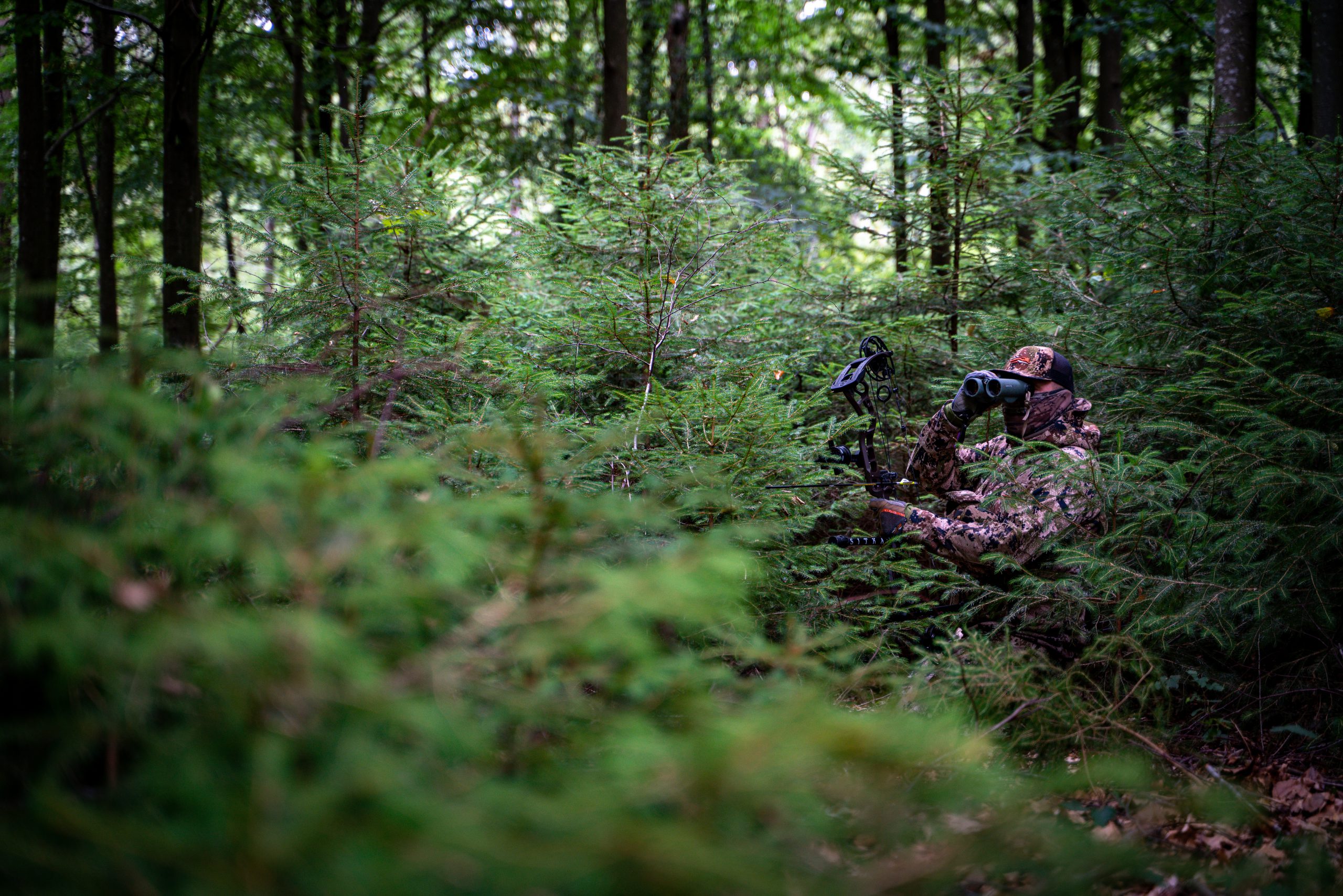
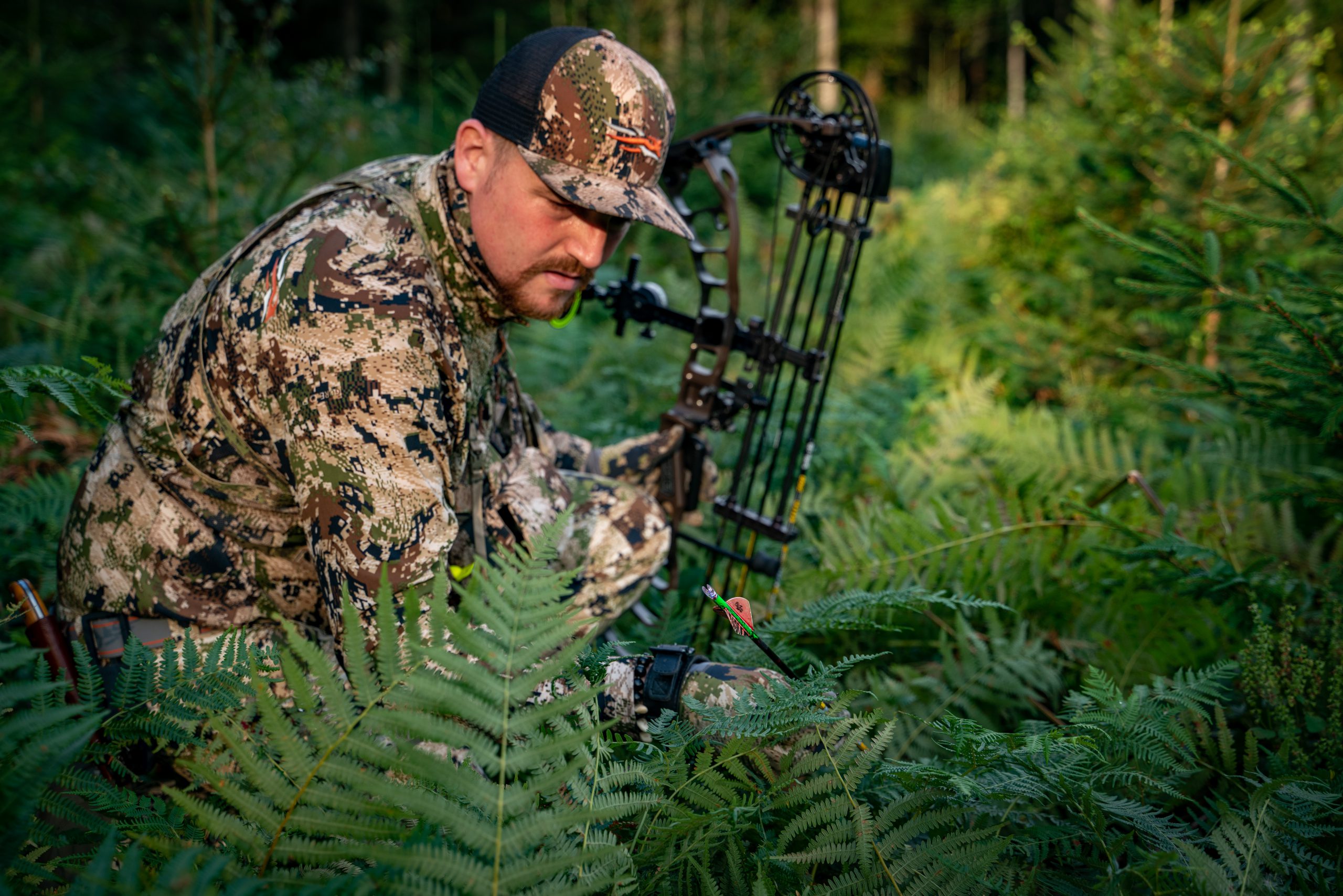
If you make the calculated decision to hunt roebuck with a bow and arrow, you have to accept the limits that this entails, but herein lies the challenge we take on in “Fair chase” as hunters.
The bow is taut from the month of May when the roebuck season opens. The bucks are currently active to mark their territory. It is the best time to take out smaller selective bucks with little potential and to remove them from the stock before they reproduce. I try to discover as much area as possible so that I can create an idea of where the goats are and where the bucks will eventually end up.
Last year in May I had seen enough bucks from a fixed high seat that had a view of a clear-cut as well as some chances while bersing in the oak forests with dense ferns, but apart from a big miss I couldn’t make any loot. Believe me, I tried.
By the end of the month, I had enough information to come up with a plan. On a certain evening with the camera I was able to film a nice buck but with the bad light conditions I could not address it 100 percent.
The season ends at the end of May and reopens on July 15, which falls just before the rut.
The rut is something special and in most years it has to happen in those few days where the older bucks drop their caution a bit to woo the goats.
Too hot and the action shifts to the middle of the night, too wet and the rut falls silent. But if you are in the right place and at the right time, you will witness magical scenes.
Calling in deer is another matter. Usually this works best with younger specimens. Older bucks hear the bad fiping from afar and no longer fall for it. They don’t grow old by being stupid. During the last days of the rut, it sometimes gets frustrating. Fighting against the hours that slowly but surely tick away, you sit in the forest, knowing that the opportunities swirl away with the wind as the rut quietly ebbs away.

After many hours of berthing and the firing of younger bucks inside, I had retreated to my high seat at the clear-cut. Older bucks still use these last days to look for goats that have not yet been mated, so I might still have a chance to get a buck. I reduced the fieping from the treestand and waited longer between sessions.
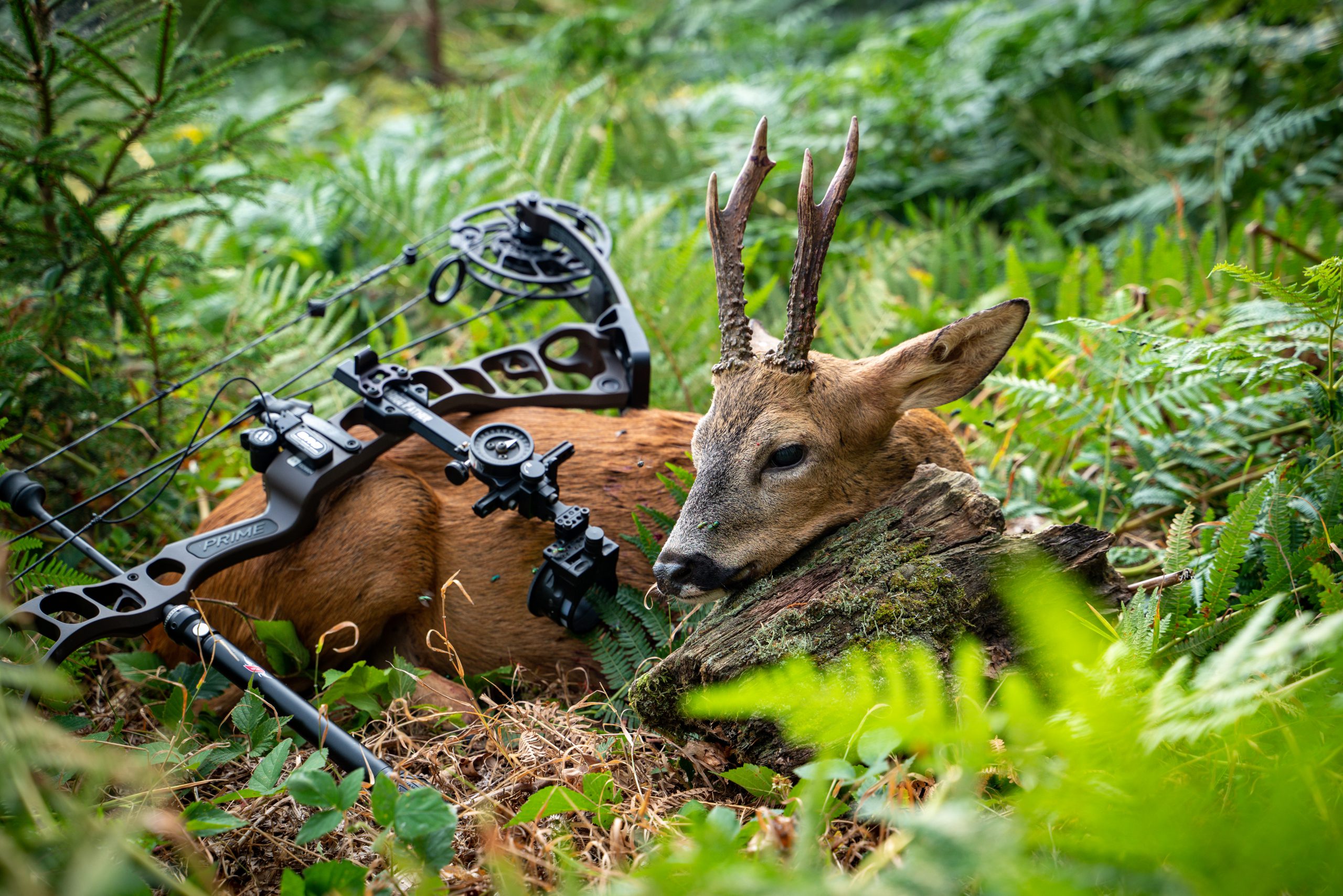
On the day I assumed that the rut was completely done, a buck walked on the clear-cutting after I only sent fieps into the forest. He came straight to the high seat, so I had no choice but to immediately draw my bow. A small fiep was enough to stop him at 30m before he would disappear into the ferns. With a graceful bow, the arrow disappears into the vital parts of the roebuck. Stumbling and not knowing what has just happened, he jumps a few meters further and then falls down at his final resting place.
Hunting is a passion with good and bad moments, but after all the work and time you invest, the feeling of venting and success outweighs all the desperate moments you’ve had.
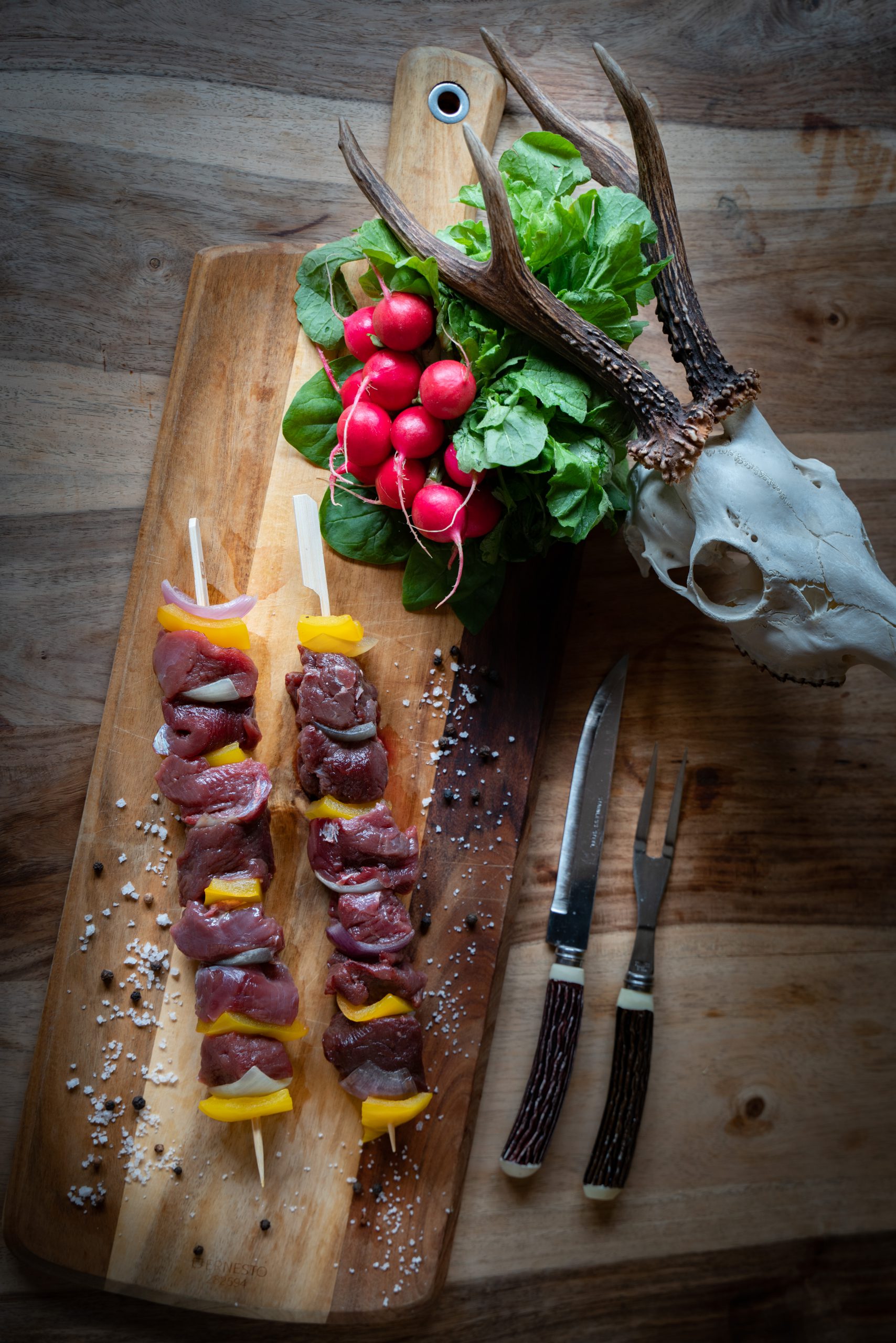
A perfect shot with an arrow does not result in a loss of game and most butchers prefer to process a piece shot with the bow rather than with a heavier caliber bullet. The meat is a nice extra bonus for me and my family.
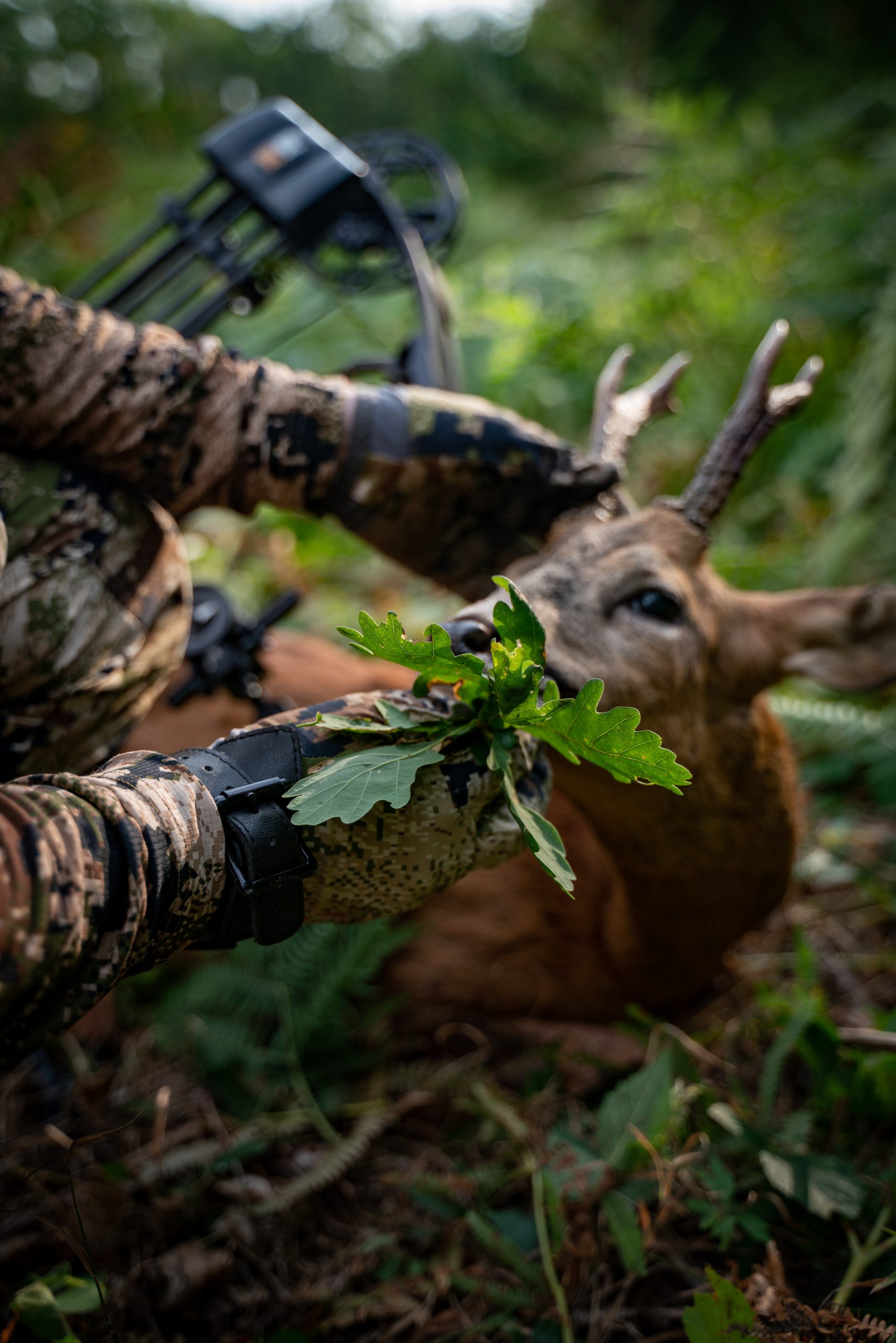

From the beginning, my friends and I have been involved in the Belgian bowhunting culture and we have started a bowhunting organization. It has become one of the most complete platforms for anyone looking for information and training on bow hunting. Our federation has several bowhunting instructors who give the IBEP (International Bow Hunters Education Program) training to anyone who wants to learn the basics of bowhunting.
Since many Belgian hunters also end up in France to go bow hunting, we have built up a good relationship with the French bow hunting association. They have given us the opportunity to become official JFO instructors so that we can also teach here. In the meantime, we have given this French training in several languages to an international audience and experienced bowhunters.
More information can be found on our webpage.
Text and photos Stefaan Rotthier, passionate hunter.