Predators – Birds of prey

All about the birds of prey.

Birds of Prey

All diurnal birds of prey can be divided into two main groups, the falcons and the other diurnal birds of prey. The falcons only use their claws to grab their prey, killing it with their bill. Therefore, in all falcons, the beak is equipped with a ” falcon tooth “. This tooth is a notch in the upper bill which, by leverage, allows the falcon to also bite through the strong tendons of the prey. The other diurnal birds of prey are ” grabbers “. They grab the prey with their claws and kill it immediately with their long nails.

All diurnal birds of prey require a certain body weight to hunt. Once its crop is full, a hawk will not go hunting until, upon reaching a certain body weight, hunger pangs prompt it to do so. This is a fact that all Falconers must take into account. To hunt with their birds, they must condition them to a certain hunting weight long in advance. The fatality in nature lies in this that if the bird is too far below its hunting weight, it is no longer able to obtain its selective prey. This of course applies not only to hawks, but to all birds of prey.

In diurnal birds of prey, females are sometimes up to 1/3 larger than males. This gives the pair the ability to hunt a variety of prey. The female hawk catches prey up to the size of a hare. In contrast, the ” Terzeltje ” ( 1/3 smaller male) secures animals up to the maximum size of a pheasant.

The subdivision of Day Predators:
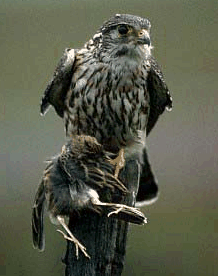
Merlin (Falco comlumbarius).

External Characteristics

At 27 cm. long, the male is not much larger than a blackbird. The female measures about 33 cm. Beyond size, there is a distinct difference in color. The top of the male is blue-gray and the underside light brown with black longitudinal stripes. The tip of the tail is black. The female, as well as young merlins, has a fairly even brown upper surface and a tail with transverse dark bands. The underside is much lighter in color. The bill is gray and the legs yellow. The call is a rapid chickadee that is heard primarily as an alarm call.

Propagation

Its breeding range is in northern Europe and the British Isles. The female of the monogamous merlin lays 3 to 5 brown speckled eggs in a nest on the ground. The incubation period is about a month and it takes another month for the young to fly. During this time, the male provides food.

Biotope and food

Smellekens need sufficient space for hunting. Therefore, in the breeding area they are mainly found in moors, bogs, tundra, etc.. Sufficient rest is also a prerequisite for the rather shy birds.

Its food consists mainly of small birds but also includes mice, lizards and insects.

Predators

The merlin is still occasionally struck by another bird of prey. During the breeding season, the female is especially at risk of being caught by a fox or a marten. This certainly applies to the young as well. Perhaps that is the main reason for the low number of merlins.

In the Middle Ages, when the merlin was used by noblemen as a hunting bird, humans also posed an additional threat.

Distribution in Flanders

The first birds arrive here as early as late September. It seems that some migrate further south and others stay here. Smellekens are often seen not far from the coast. In the Zwin, the polders of East Flanders or in the area of the left bank of the Scheldt, small numbers occur in winter. Because they hunt low above the ground for squeakers, tits, etc., they do not stand out.

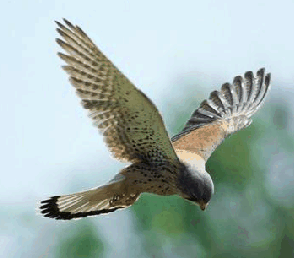
Kestrel (Falco tinnunculus).

External Characteristics

The length of the male is 32 cm. and of the female 35 cm. The back and tail, and in the male also the head, are gray. The underside is light brown and the wings are deep brown. In the male slightly darker and more chocolate brown. The tips of the wings and tail are dark. The legs and bill are yellow.

Propagation

Kestrels usually lay 4 to 5 eggs that are almost completely covered with reddish-brown spots. They do not make a nest themselves. Old nests of e.g. crows and nest boxes provide nesting opportunities. It is recommended to put some tree bark or fine gravel in the nest boxes as otherwise the eggs will roll away. After the female has incubated the eggs for 4 weeks, the young appear. After 5 weeks, they are ready to fly. Tree falcons live monogamous lives.

Biotope and food

Kestrels need open landscape. Preferably in agricultural areas with some trees or bushes. It will also like to nest in orchards, where the farmer often hangs a nesting box.

Food consists of the occasional small bird or insect, but mostly mice. The “praying” kestrel that sinks as if by elevator a few times and then flashes down. It is always worth seeing again. Perhaps the greatest miracle is that he does not crash. Sometimes he snatches prey from other raptors.

Predators

Other than the hawk, the kestrel usually does not have much to fear from predators. A much greater danger is traffic. After all, one of its favorite hunting grounds is the roadside. Young birds in particular regularly fall victim to traffic there.

Distribution in Flanders

The kestrel is by far the most common falcon in Flanders. And for that matter also the most common bird of prey.

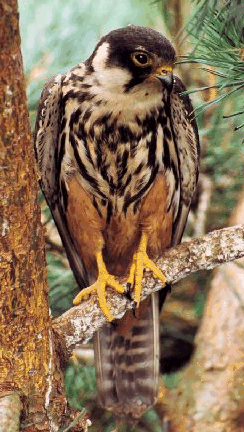
Tree falcon (Falco subbiteo).

External Characteristics

At 30 cm. long for the male and 35 cm. long for the female, the tree falcon is our smallest falcon breeding here. The upper face and tail are slate gray. Breast, belly and upper wing are brown and the pants are reddish-brown. Legs and bill are yellow. Has a distinctive dark beard stripe. With its sickle-shaped wings, is certainly our most agile falcon. The sound is a clear and rapidly repeated pieuw-pieuw-pieuw

Propagation

Tree falcons usually do not return from tropical Africa until May. They do not build their own nest, but like to use an old crow’s nest. The 2 to 4 reddish-brown speckled eggs are usually laid in late May, early June. After 4 weeks of incubation, the young hatch and can fly 30 days later.

Biotope and food

The tree falcon prefers semi-open landscape. Some woods or groups of trees, but certainly enough open field. The latter it needs to practice its fast attack flights. Handily it uses trees and wooded banks for its surprise attacks. Its food consists of insects such as beetles and dragonflies, but especially small birds. Also to beat fast flyers like swallows is no problem for him.

Predators

The tree falcons here have little to fear from predators. An occasional tree falcon is beaten by a hawk. Young sometimes fall victim to a pine marten. Occasionally traffic also claims a victim.

Distribution in Flanders

As a migratory bird, of course, it can only be seen in the summer. And even then it is a rather rare breeding bird. The number of breeding pairs in Flanders remains limited to a few dozen. Too bad, because it is a wonderful spectacle to see the tree falcons busy as acrobats of the skies.

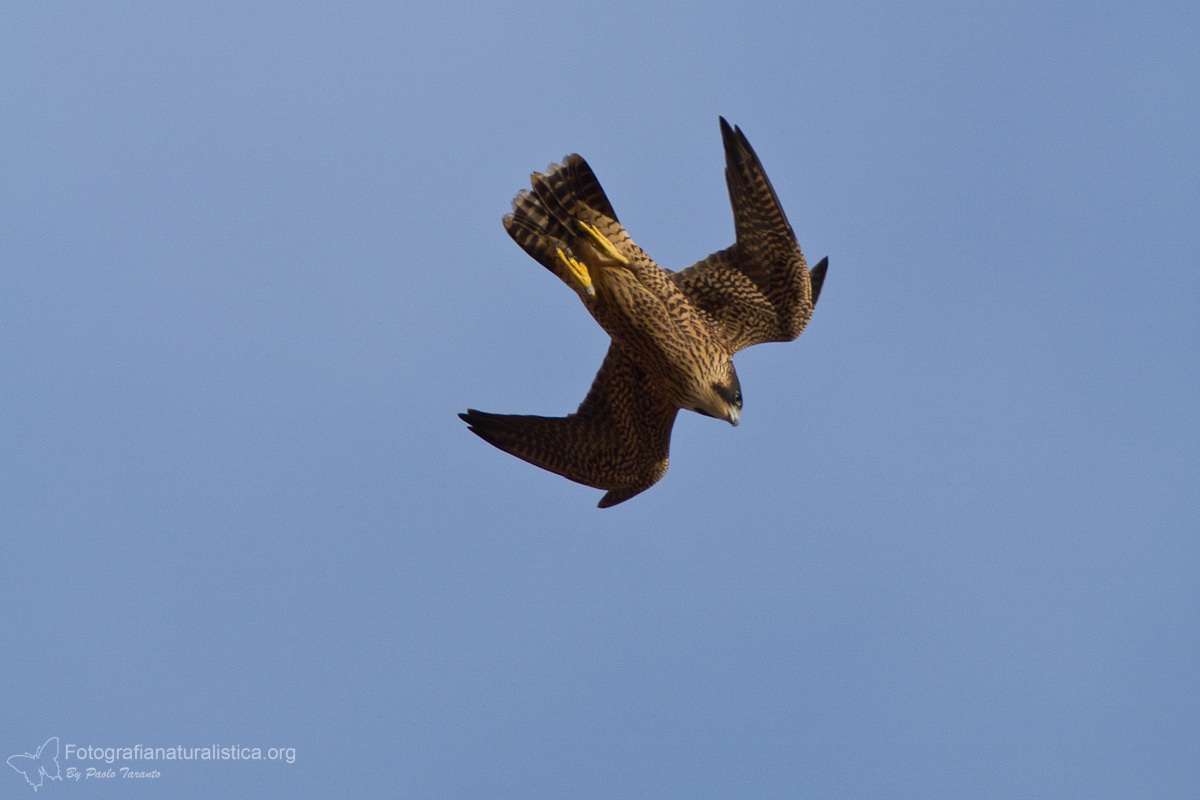
Peregrine falcon (Falco peregrinus).

External Characteristics

The size for the male and female is 39 cm. and 50 cm. respectively. The birds have a blue-gray upper surface and tail. The top of the head is darker. It has a white throat and distinctive beard stripes. The legs are yellow and the bill yellow with a gray tip. Its wingspan of more than a meter indicates that it is an excellent flyer. One has measured speeds of over 180 km. per hour. The sound is somewhat squawking.

Propagation

Naturally, the peregrine falcon nests on rocky ridges. In Flanders, it contents itself with nest boxes hung on high buildings. Examples are cabinets on the various cooling towers such as of Doel and Gent-Rodenhuizen. They brood on the 3 to 4 eggs about and month. The young can fly when they are over 7 weeks old. Like all falcons, peregrine falcons live monogamous lives.

Biotope and food

Because of their way of hunting, peregrine falcons need a lot of space. It is perhaps no coincidence that one of the first flocks in Flanders settled in Doel. The majority of their food consists of birds. These may be small songbirds, but also birds the size of a mallard duck. Often they are pigeons, gulls crow, etc..

Predators

The peregrine falcon has little to fear from predators. The hawk might be able to strike it, but it lives in a different environment. Even the young are relatively safe in their high-altitude nest. One of the few dangers is probably traffic.

Distribution in Flanders

Not so long ago a single flock was breeding in Wallonia. Now there are more than 10 flocks in Belgium, most of them in Flanders. Many will probably never come. Opportunities are too limited for that. In winter there are usually more present.

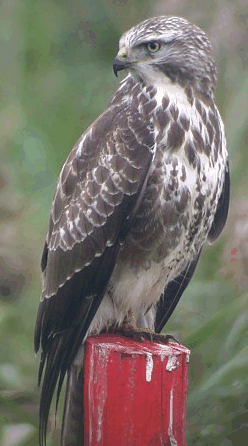
Buzzard (Buteo buteo).

External Characteristics

The buzzard is a substantial bird with a length of 52 cm. to 57 cm. The French name Buse variable indicates the enormous differences in color. From almost white with some brown spots to dark brown. The wings are rather rounded in flight. When hovering, the tail is spread and the outer flight feathers rise a bit. Some describe it as a lazy bird. If that exists at all, they probably mean a slow bird. The otherwise remarkably small legs are yellow, as is the bill.

Propagation

The courtship flight of the buzzards is always beautiful to watch. The birds wallowing sideways around each other. The buzzard’s nest consists of fairly thick branches lined with thinner twigs, grass and moss. It is built by both parents high up in a tree. The 3 to 5 eggs are incubated for 5 weeks from the first egg. The last born young often does not survive because it is crowded out by the larger ones. It takes more than 7 weeks for them to leave the nest. The buzzard lives monogamously.

Biotope and food

The buzzard prefers semi-open landscapes. Used to be found mostly on sandy soil. Now it is found everywhere, as long as there are enough trees. It likes to watch the surroundings from a lookout. That it is called a mouse buzzard in Germany says something about its food. Being a rather slow bird, it also eats a lot of dead animals. Nevertheless, it also catches birds and small mammals. It does not shun insects, reptiles and amphibians either.

Predators

An adult buzzard has little to fear. Eggs and young are occasionally snatched by a crow or a pine marten. A much greater danger is traffic and especially poison. This, of course, has everything to do with eating dead animals. People who take advantage of that grossly overestimate its abilities.

Distribution in Flanders

The buzzard is probably the most common bird of prey in Flanders after the kestrel. In winter, many birds from northern and eastern Europe are added.

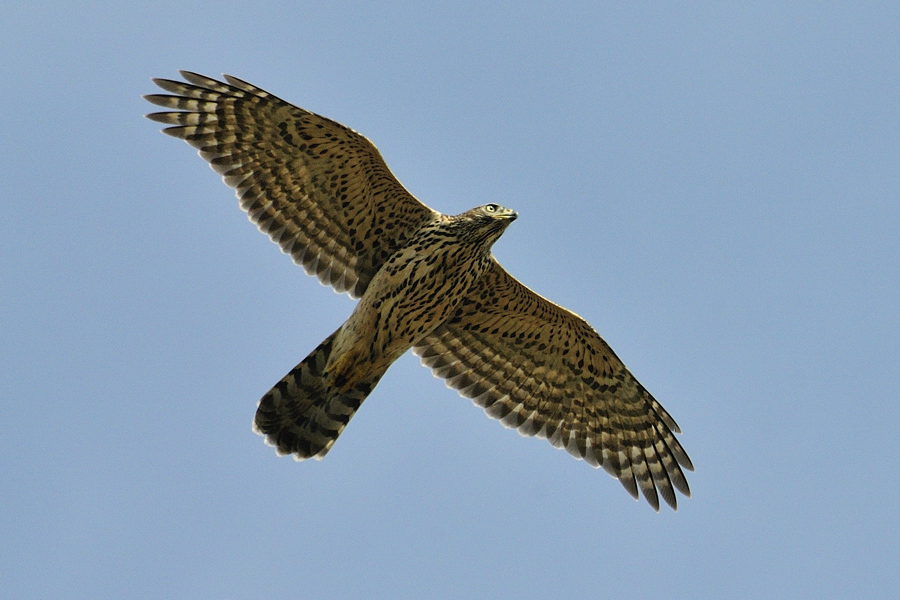
Goshawk (Accipiter gentilis)

External Characteristics

The size difference between the female and the male is very large at 62 cm. and 48 cm. respectively. It is a substantial, gray-brown bird with a fairly long tail. The underside of the body is lighter and striped with transverse bands. The hawk has a distinctive light brow stripe. Its rounded wings and long tail enable it to fly between trees and shrubs at great speed. The rather long legs are yellow and the beak is gray. The sound is an unremarkable kek-kek.

Propagation

The hawk prefers to build its nest (horst) high up in a coniferous tree. It is a flat construction of branches to which green branches are regularly added. The female must incubate blue-white eggs for about 38 days before 3 to 5 young hatch. The first week the male provides food, then both parents. The young can fly after about 5 weeks. The hawk is monogamous.

Biotope and food

The hawk is a bird of varied landscape as long as there is enough forest. Is perfectly capable of successfully pursuing prey between trees and bushes. Even a runaway rabbit is not safe from him there. He is capable of striking prey up to the size of a pheasant. Nevertheless, he prefers animals the size of a pigeon. He will also not despise a rat, a young hare or a rabbit. Because pigeons are among his favorite prey, he is the terror of pigeon fanciers in some regions.

Predators

The adult hawk has few enemies in our country. Young in the first weeks of life sometimes fall victim to a pine marten.

Distribution in Flanders

Although the population has increased somewhat in recent years, the goshawk remains a scarce breeding bird.

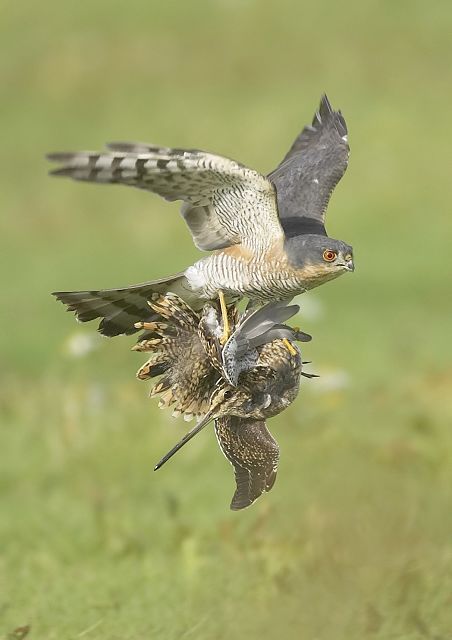
Sparrowhawk (Accipiter nisus)

External Characteristics

The sparrow hawk closely resembles the goshawk, but with a length of 38 cm. for the female and 28 cm. for the male is a lot smaller. In addition, the female in particular is much browner. Striking are the transverse bands over at whole body. Has the same rounded wings as the hawk. The legs and beak are yellow. The sound is a rapidly repeated kek-kek-kek.

Propagation

The flat nest, called horst, also resembles that of the hawk. Sometimes an old nest of another bird is used as a base. The 4 to 6 bluish-white eggs hatch after 33 days of incubation. The young remain on the nest for more than 30 days. Sparrows live monogamous lives.

Biotope and food

The sparrowhawk prefers semi-open landscapes. It uses forests, wooded banks, as well as buildings to carry out its surprise attacks. One of the consequences, incidentally, is that it often flies into windows. In young sparrows, this accounts for about half of the causes of death. The food of the sparrowhawk consists for the most part of small birds. The female is capable of striking birds up to the size of a turkey turtle, but usually prefers smaller species

Predators

Sparrowhawks occasionally fall victim to a hawk. Young sparrows on the nest sometimes serve as prey for a pine marten. Many times greater is the number that perish in the first months of life.

Distribution in Flanders

Several decades ago, the sparrowhawk had almost become a rare bird. The then use of agricultural poisons had a lot to do with that. Now the sparrowhawk has become a very common sight, regularly seen even in built-up areas.

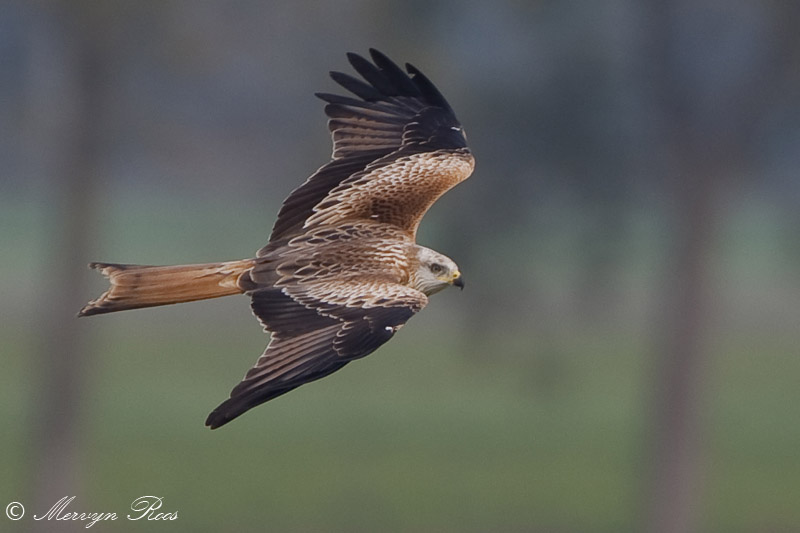
Red Kite (Milvus milvus)

External Characteristics

At 65 cm. the female is slightly larger than the hawk. The male is not much smaller. The top of the wings and forked tail is reddish-brown. The head is noticeably lighter in color. If in most birds of prey the wingspan is about 2.25 times its length, this is not true of the kite. It has a wingspan of 145 to 165 cm! In flight, the light tail with dark tip and the white armpit patches on the wings can be clearly seen The beak and legs are yellow. The sound somewhat resembles the mewing of a buzzard, but is much more shrill and faster.

Propagation

The red kite likes to make its nest in a forest and preferably in a deciduous tree. It is made not only of branches, but also of garbage such as pieces of paper and plastic. The 2 to 3 red-brown spotted eggs require only 30 days of brooding. The young fly out after 5 weeks. The monogamous kite is very sensitive to disturbance.

Biotope and food

They prefer varied landscape with sufficient forest. Was often found near cities until the second half of the 19th century. The offal there was its main source of food. Even today its food consists largely of carrion. Anything he finds of dead animals is welcome. In addition, they also eat birds, mammals up to the size of a rabbit and insects.

Predators

The adult red kite faces little danger from predators. The greatest danger to him usually comes from humans. Together with the buzzard, it is the first victim of poisoned animals. Of course it makes no difference whether they have been poisoned deliberately or have died from agricultural poisoning.

Distribution in Flanders

The red kite that winters in Africa is a very scarce breeding bird in Flanders. Yet it is not only seen as a migrant. Sometimes in summer it spins its rounds high in the sky, soaring on its huge wings.

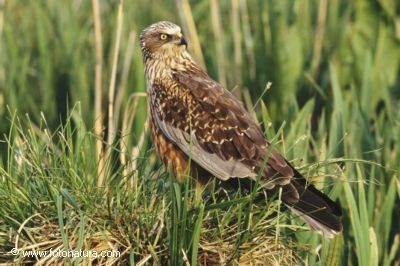
Marsh Harrier (Circus aeruginosus)

Appearance characteristics

At about 56 cm, the female is larger than the 48 cm measuring male. They are dark brown birds with almost black flight feathers. The underside of the wings is much lighter. The head, especially of the female, is a striking light brown. When flying and hovering, the wings form a slight V-shape and the outer flight feathers are distinctly upward-pointing. The bill is yellow with a dark tip and the legs are yellow. The call is somewhat similar to that of a guinea fowl.

Propagation

The harrier is one of the few raptors that nests on the ground. In the case of the marsh harrier, it is almost exclusively in the reeds. Construction of the nest in which 4 to 5 eggs are laid begins in early April. The female incubates for about 5 weeks. For the first time, the male brings food for the female and children. He is not welcome at the nest, but drops the food. The female then tears it into pieces for the young. It takes about 7 weeks for them to fledge. Harriers live monogamous lives.

Biotope and food

The marsh harrier has a distinct preference for open landscape. Reed should not be missing from this. This can range from vast reed beds to a wide ditch with reeds. The fields with grain and other crops serve to search for its prey. Flying low above the fields, it systematically searches them for prey. This prey consists mainly of young birds and the occasional young mammal or amphibian. The harrier did not steal its name.

Predators

Until a few years ago, harriers hardly had anything to fear from predators. Only once in a while did a crow rob the young. Now that the fox has also established itself in the harrier’s habitat, this has changed. To what extent a fox also takes breeding harriers is not known. It is known, however, that the number of successful clutches is declining sharply.

Distribution in Flanders

Wherever reeds can be found, there is a good chance of finding the marsh harrier. In Flanders, this usually involves areas with creeks such as in northern East Flanders. Moreover, the chances of seeing harriers in winter are increasing. They migrate much less to the south. In addition, blue harriers can often be seen then.

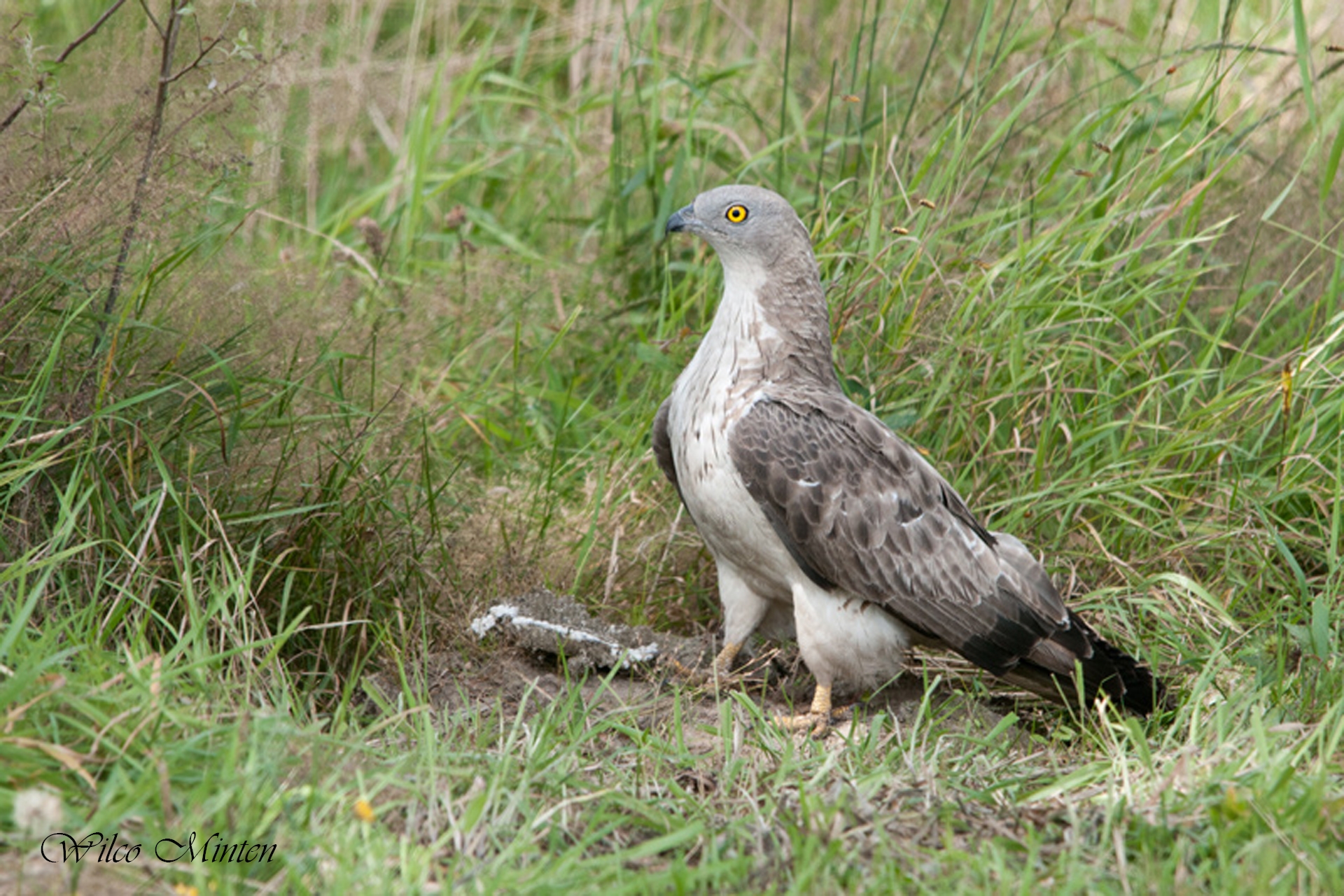
Caspian tern (Pernis apivorus).

External Characteristics

The color of the 52 to 58 cm tall bird ranges from light brown to dark brown. The throat and breast are almost white. The transverse bands on the tail are dark brown. In flight, the dark spots on the underside of the wings are clearly visible. The legs are yellow and the bill yellow with a dark tip. On the head, the Waxwing is quite recognizable given its resemblance to a pigeon’s head.

Propagation

When wheatears return from Africa in May, they look for an old crow or buzzard’s nest and refurbish it a bit. The courtship flight with its rapid diving is spectacular to see. They lay only 2 eggs studded with reddish-brown spots. After nearly 5 weeks of incubation, the young hatch and leave the nest after 6 weeks. As well as virtually all raptors, wasp harriers also live monogamous lives.

Biotope and food

The horned tern likes to live in and near coniferous forests. Since the nest is preferably at a height of at least 10 meters, these will not be young forests. Moreover, older forests have less undergrowth and therefore more wasp nests. It relies on the latter. The larvae of wasps are its main food. If that is not enough, the menu is supplemented with other insects, frogs and young birds.

Predators

The chickadees also have few or no predators here. Young birds are still occasionally snatched, but adults are in little danger.

Distribution in Flanders

Because of its hidden lifestyle, the horned tern is certainly more common than is thought. Moreover, they are only in our country from May to September. It can be assumed that they are present everywhere in Flanders where the right biotope is available. During migration, the spectacle of several dozen horned terns circling each other can sometimes be seen.

No permit yet?

Jachtexamen.be is the online learning environment for hunting, providing optimal exam preparation.